
How to Import Papad in UAE
Home > How to Import Papad in UAE
How to Import Papad in UAE: The Ultimate Step-by-Step Guide for Indian Exporters and UAE Buyers
The United Arab Emirates (UAE) represents one of the most vibrant, consumption-driven food markets in the Middle East. With a diverse, multicultural population where South Asian expatriates comprise a massive demographic segment, the demand for authentic traditional food products is consistently scaling new heights. Among these products, the humble Indian papad—a thin, crisp, disc-shaped food typically made from seasoned dough of peeled black gram flour, lentils, chickpeas, or rice—has evolved from a traditional household accompaniment into a commercial powerhouse. For entrepreneurs, retail chains, and food distributors aiming to capture this lucrative segment, understanding how to import papad in UAE is the definitive gateway to a highly profitable business venture.
The global landscape of ethnic food trading requires a meticulous approach to international logistics, regulatory compliance, and strategic sourcing. Navigating the commercial corridor between India and the emirates demands more than just a basic understanding of trade; it requires an operational roadmap. When business owners discover how to import papad in UAE, they open doors to a snack industry that thrives across supermarkets, corner grocery stores, luxury dining spaces, and wholesale markets alike. This comprehensive guide breaks down every critical component of the import ecosystem, ensuring that your enterprise minimizes risk, avoids customs bottlenecks, and builds a sustainable supply chain.
Establishing a footprint in the Arabian Peninsula’s food sector requires aligning with partners who possess deep domain expertise in cross-border food logistics. Reliable supply networks are the bedrock of this trade. Experienced export houses, such as OM Exim Traders, play an instrumental role in bridging the gap between high-quality Indian manufacturing facilities and the stringent import structures of the Gulf Cooperation Council (GCC). By leveraging the specialized export capabilities of a dedicated partner, businesses can navigate the complexities of how to import papad in UAE with absolute confidence, transforming regulatory hurdles into structured milestones for corporate growth.
Why Papad Demand is Growing in UAE
The consumer landscape of the UAE is structurally unique. It is characterized by high disposable income, rapid urbanization, and an deep-seated appreciation for global cuisines. Within this environment, packaged food products that offer convenience, extended shelf life, and authentic regional flavors experience sustained market growth. To understand how to import papad in UAE, one must first analyze the core market drivers that make this specific product an indispensable asset for retail portfolios and food service entities across the country.
Indian food market in Dubai
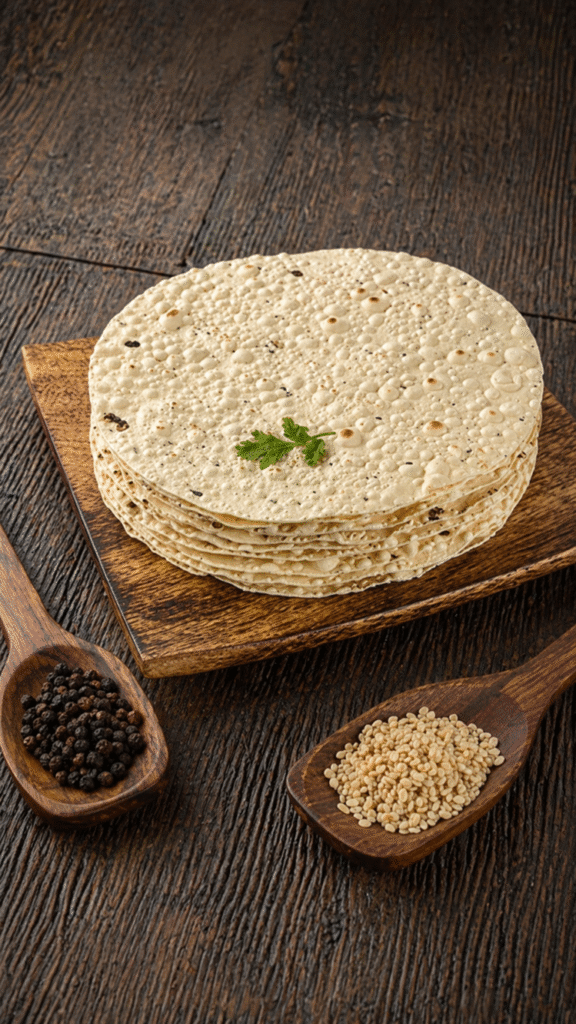
Dubai has firmly established itself as the culinary and commercial hub of the Middle East. The Indian food market in Dubai is no longer restricted to specialized ethnic enclaves; it has thoroughly penetrated mainstream consumer segments. From high-end fine dining establishments in the Dubai International Financial Centre (DIFC) serving avant-garde fusion appetizers to the bustling cafeterias of Deira and Bur Dubai, Indian culinary elements are ubiquitous. Papad serves as a versatile item within this ecosystem—acting as a complimentary table starter, a crunchy texture element in modern culinary plates, and a standalone snack. The sheer volume of food service establishments requiring consistent, high-volume wholesale shipments is a prime reason why mastering how to import papad in UAE has become a priority for commercial food procurement managers.
Demand among Indian expatriates
Demographic data continuously highlights that South Asians, particularly Indian nationals, form the largest expatriate community in the UAE. This massive population maintains a strong psychological and cultural connection to traditional dietary habits. For millions of residents, a meal is incomplete without the familiar crunch of a well-prepared papad. This deep-seated cultural consumption habit creates an insulated, recession-proof demand curve. Whether it is a daily lunch accompaniment or an essential item for major festivals like Diwali, Eid, and Navratri, the consumption volumes remain exceptionally high. When evaluating how to import papad in UAE, traders are essentially targeting a captive consumer market that views this product as a daily necessity rather than an occasional luxury purchase.
Growth of packaged Indian snacks
Modern consumer trends across the emirates show a distinct shift toward premium, hygienically packaged, and portion-controlled snack items. The overall growth of packaged Indian snacks in the region is outperforming many traditional snack categories. Consumers are increasingly seeking out clean-label, preservative-free, and authentically spiced alternatives to standard potato chips and corn snacks. Papad fits perfectly into this wellness-oriented paradigm; it is naturally gluten-free, can be roasted instead of fried, and is packed with lentil-based protein. As modern hypermarkets allocate more shelf space to international ethnic snacks, learning how to import papad in UAE provides importers with a high-margin product that aligns precisely with contemporary consumer health and convenience trends.
Complete Guide on How to Import Papad in UAE
Transforming a commercial ambition into an operational reality requires a structured approach to the international trade lifecycle. The process of moving dry food products across international borders involves distinct phases, each demanding careful execution. Below is the definitive, step-by-step operational framework illuminating exactly how to import papad in UAE, designed to take an enterprise from initial market assessment to final retail distribution.
Step-by-step import process
Market Research
Before capital is deployed, comprehensive market research must be executed within the specific emirates targeted for entry. Importers need to analyze local taste preferences, which vary significantly between regions. For instance, the consumer profile in Dubai might lean toward premium, low-sodium, or uniquely flavored variations, while the wholesale market in Sharjah or Ajman may demand high-volume, traditional Udad and garlic-flavored variants. Research must also encompass price-point mapping across major retail chains, analysis of competitor packaging sizes (such as 100g bags versus 500g commercial packs), and an assessment of seasonal demand spikes. Understanding these nuances is the foundational element of how to import papad in UAE successfully.
Choosing Suppliers
The longevity of an import business depends entirely on the reliability, capacity, and compliance of the chosen manufacturing partner. When learning how to import papad in UAE, one discovers that the cheapest supplier is rarely the safest or most profitable option. Importers must select suppliers whose facilities are certified by international food safety bodies and who thoroughly understand the technical parameters of cross-border trade. Working alongside an established export house like OM Exim Traders simplifies this step immensely. A reputable partner ensures that the manufacturing process is standardized, the moisture content is precisely managed to prevent spoilage during transit, and the raw materials used meet the strict purity standards mandated by Gulf regulatory authorities.
Documentation
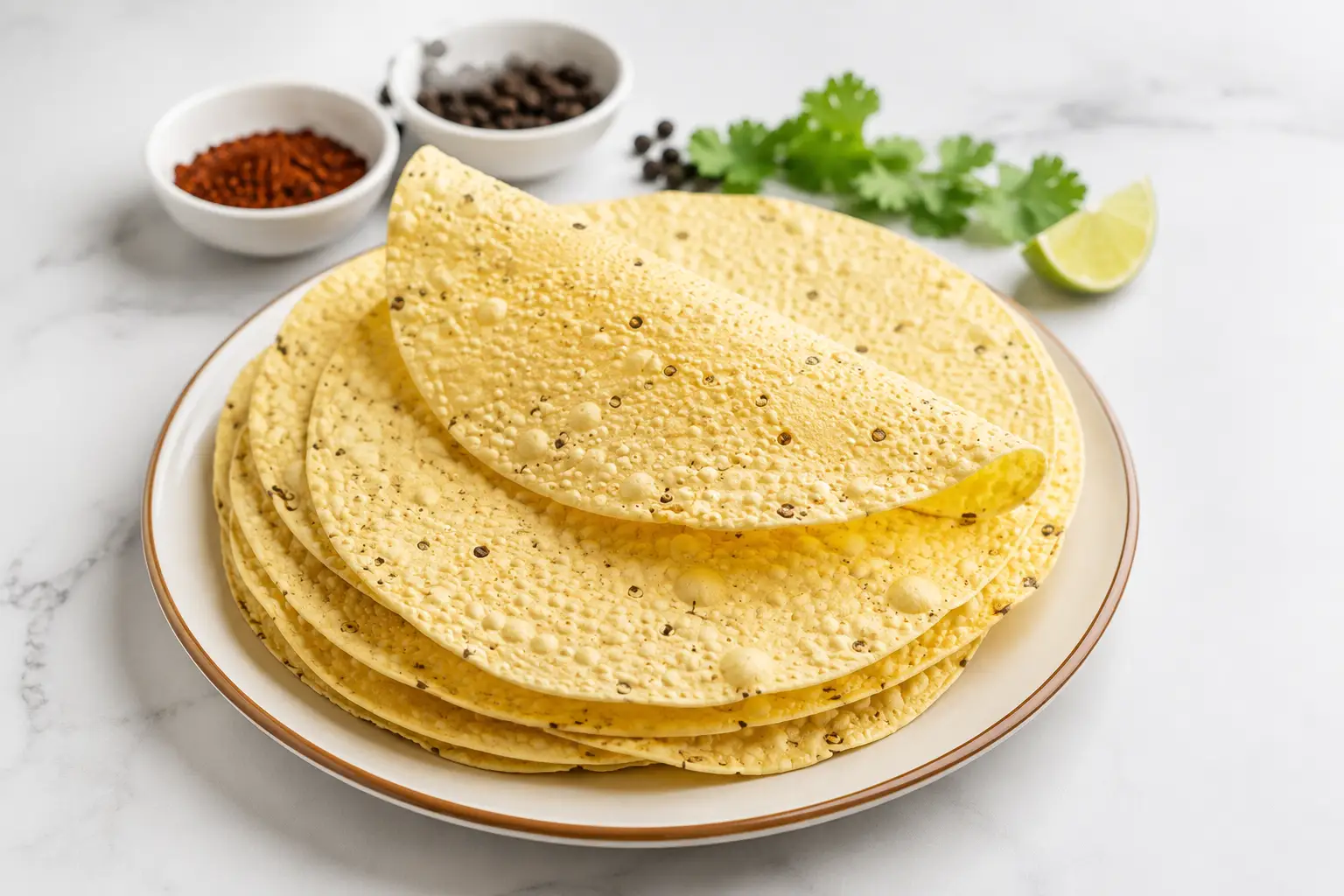
The document compilation phase is where many uninitiated traders face critical delays. To successfully execute how to import papad in UAE, a complete dossier of both Indian export documents and UAE import filings must be prepared flawlessly. This includes securing the initial commercial invoices, packing lists with net and gross weights, certificates of origin, and specialized phytosanitary or food laboratory test reports. These documents must match perfectly across every line item; a minor discrepancy in the product description or weight declaration between the shipping bill and the import permit can cause customs authorities to flag the container for physical audit, incurring expensive demurrage fees.
Shipping
Logistics management for dry snacks revolves around preserving product structural integrity and preventing moisture ingress. Papad is a fragile commodity prone to breakage if subjected to rough handling or improper palletization. Importers must decide between Less than Container Load (LCL) for initial test batches or Full Container Load (FCL) for optimized shipping economics. Given the hot and humid maritime transit conditions from Indian ports like Nhava Sheva or Mundra to Dubai’s Jebel Ali Port, choosing the right container type and ensuring professional cargo stuffing with moisture-absorbent silica gel bags is vital. This logistical precision is a core component of how to import papad in UAE without sacrificing product quality.
Customs Clearance
Upon arrival at the UAE port of entry, the shipment enters the jurisdiction of Dubai Customs or the respective emirate’s customs authority. The customs clearance mechanism involves electronic manifest filing, verification of import permits, payment of applicable duties, and potential physical routing to food inspection bays. Importers must work with licensed, experienced customs brokers who specialize in food imports. A smooth customs clearance process requires having all digital codes active on the tracking portals, such as Dubai Trade, and ensuring that the physical cargo matches the digital declarations perfectly.
Distribution
Once customs grants the ‘Customs Release Order,’ the journey of how to import papad in UAE shifts from logistics to domestic supply chain management. The cargo must be transported via clean, temperature-controlled transport vehicles to authorized food storage warehouses. From these hubs, the product is routed into chosen distribution channels—whether that involves direct delivery to supermarket procurement centers, delivery to wholesale cash-and-carry markets, or supplying the commercial kitchens of catering companies and restaurant groups across the country.
Documents Required to Export Papad to Dubai
Administrative precision is mandatory when dealing with international food trade. The regulatory frameworks of both the exporting nation (India) and the importing nation (UAE) feature multiple layers of compliance designed to protect public health and ensure economic transparency. If you are structuring your business model around how to import papad in UAE, mastering the following breakdown of paperwork is non-negotiable.

Mandatory licenses
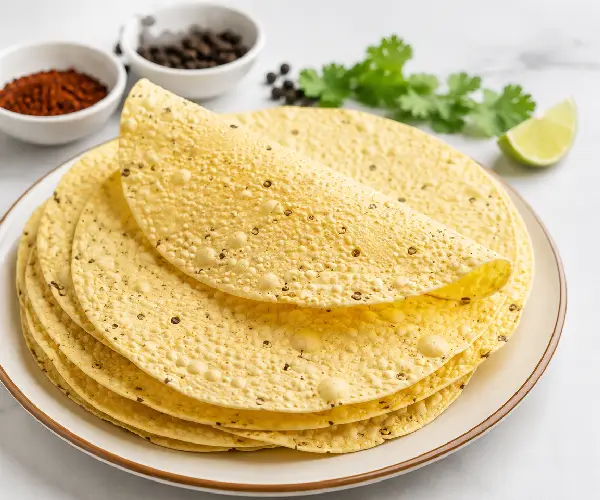
To legally engage in the international movement of food goods, specific corporate licenses must be maintained in active status. In India, the entity must possess a valid Import Export Code (IEC) issued by the Directorate General of Foreign Trade (DGFT). On the receiving end, the UAE entity must hold a valid commercial trade license that explicitly authorizes foodstuff import and trading activities. Without these fundamental corporate identities established in their respective jurisdictions, it is impossible to initiate the food product import process UAE authorities manage daily.
Import permits
Before the vessel carrying the cargo departs the port of loading in India, the UAE importer must secure a pre-arrival import permit through the official portal of the relevant local authority, such as the Dubai Municipality’s e-Government portal (FIRS – Food Import and Re-export System). This digital permit confirms that the specific food item has been reviewed, its ingredients are pre-approved, and the importing company is cleared to bring that specific classification of dry snack into the country. Securing this permit is a critical milepost in the execution of how to import papad in UAE.
Export documentation
The operational paperwork generated at the point of origin must accompany the cargo throughout its maritime journey. A standard export dossier includes:
- Commercial Invoice: Detailing the exact value, transaction currency, and incoterms (e.g., FOB, CIF).
- Packing List: Documenting the precise carton count, inner packaging specifications, and weight metrics.
- Bill of Lading (B/L): Issued by the shipping line, serving as evidence of the contract of carriage and receipt of goods.
- Certificate of Origin: Authenticated by local Chambers of Commerce in India, validating that the products are manufactured in India, which is critical for tariff assessments under trade agreements.
FSSAI export requirements
The Food Safety and Standards Authority of India (FSSAI) plays a definitive role in regulating food quality leaving Indian shores. Exporters must secure an FSSAI Central License with an explicit export endorsement. The FSSAI export requirements dictate that the food products must be manufactured in facilities that adhere to strict Good Manufacturing Practices (GMP) and Hazard Analysis Critical Control Point (HACCP) protocols. The authority issues a Food Export Certificate after examining product samples, ensuring that the papad batch contains no prohibited food additives, heavy metals, or pesticide residues, thereby smoothing the process of how to import papad in UAE once the cargo arrives at destination.
APEDA registration
Papad, being a value-added agricultural product predominantly composed of processed pulses and lentils, falls under the developmental umbrella of the Agricultural and Processed Food Products Export Development Authority (APEDA) in India. Obtaining an APEDA registration and a Registration-cum-Membership Certificate (RCMC) is highly advantageous for exporters. APEDA provides vital market intelligence, financial assistance schemes for export infrastructure development, and acts as a validating body for the authenticity of agricultural exports. For businesses refining their strategy on how to import papad in UAE, partnering with an APEDA-registered exporter like OM Exim Traders guarantees that the origin-side agricultural compliances are flawlessly handled.
Halal certification
While papad is inherently a plant-based, vegetarian item made from lentil flours and spices, the regulatory landscape of the GCC places immense emphasis on clear halal compliance for all imported food items. Halal certification for papad UAE imports involves securing a certificate from an accredited Islamic body in India recognized by the UAE’s Ministry of Industry and Advanced Technology (MoIAT) or Emirates International Accreditation Centre (EIAC). This certification validates that no alcohol-based processing aids, animal-derived enzymes, or cross-contamination with non-halal substances occurred in the manufacturing facility. Having this document ready prevents unexpected rejections at the port of entry and is an essential component of how to import papad in UAE.
UAE Food Import Rules and Regulations
The UAE government enforces some of the highest food safety and quality control standards in the world. These measures protect consumers from substandard products, incorrect labeling, and foodborne health hazards. Anyone developing an enterprise around how to import papad in UAE must understand these institutional frameworks deeply to ensure their business remains operational and compliant.
UAE food import license
An importer cannot simply use a general trading setup to clear commercial food shipments through customs. The local entity must possess a specific UAE food import license linked to an active food trade category. This license requires the company to have an approved physical facility or a contract with an authorized third-party logistics (3PL) provider that maintains a food-grade warehouse inspected and certified by local municipal authorities. This license must be systematically renewed and mapped to the customs digital portals before initiating any trade activities.
Dubai Municipality rules
The Dubai Municipality, through its Food Safety Department, acts as the primary regulatory watchdog for imports entering via Dubai’s borders. The Dubai Municipality rules require every imported food product to undergo a rigorous process known as ‘Food Item Registration.’ Before shipping, a sample of the papad, along with its complete ingredient breakdown and artwork design, must be uploaded to the Zabeel portal. The municipality reviews the product to ensure that all ingredients, including raising agents (like sodium bicarbonate) and spices, are permitted within the UAE. Once approved, the item receives a unique food barcode, which is a critical prerequisite for anyone executing how to import papad in UAE.
Labeling requirements
Labeling compliance is a primary area where new importers face challenges. The UAE authorities mandate that food labels be printed clearly in Arabic (either as part of the primary packaging print or via an approved, securely affixed bilingual sticker). The label must contain specific, unalterable information:
Failing to meet these exact labeling requirements will result in the entire shipment being detained, with authorities ordering either a total re-labeling in a bonded customs warehouse (which is highly expensive) or re-export to the country of origin. This underlines why understanding packaging artwork rules is vital when mastering how to import papad in UAE.
Best Strategy to Start Papad Export Business UAE
Entering a highly competitive marketplace like the UAE requires a well-defined commercial strategy. Simply importing a container of high-quality papad and hoping for buyers is a high-risk approach. To build a highly profitable papad export business UAE buyers respect, you must systematically approach market entry through targeted commercial channels.
Finding buyers
The hunt for sustainable, credit-worthy buyers requires a proactive, multi-channeled engagement strategy. Exporters and importers should actively participate in premium regional trade exhibitions, most notably Gulfood Dubai, which is the world’s largest annual food and beverage sourcing event. This platform allows businesses to showcase product crunch, thickness, and flavor profiles directly to international procurement heads. Additional buyer-finding strategies include leveraging the database of the Indian Embassy in Abu Dhabi, engaging with the Dubai Chamber of Commerce, utilizing digital B2B trade portals, and conducting direct physical outreach to the purchasing offices of major supermarket chains and wholesale trading groups across the emirates.
Wholesale market targeting
For immediate volume velocity and quick cash-flow cycles, targeting the traditional wholesale markets is an excellent initial strategy. In the UAE, the Al Ras Wholesale Market in Deira, Dubai, and the centralized food markets in Sharjah and Ajman serve as massive redistribution hubs. These markets supply thousands of small independent grocery stores (baqalas), ship-chandlers, and small-to-medium restaurants across the country and the wider GCC region. By partnering with established wholesale merchants in these zones, an importer can move large quantities of papad rapidly, gaining market insights and brand visibility without upfront supermarket listing costs.
Food distributor partnerships
Aligning your business with an established, Tier-1 or Tier-2 FMCG food distributor is one of the most effective ways to scale up operations. Specialized distributors already possess the logistical infrastructure, fleets of delivery vans, and pre-existing vendor accounts with major institutions. When an importer brings in premium products backed by an experienced supplier like OM Exim Traders, regional food distributors are often highly receptive to adding these high-margin items to their existing portfolios. This relationship allows the importer to focus entirely on supply chain optimization while the distributor handles daily local market penetration.
Supermarket distribution
The pinnacle of long-term brand equity in the UAE is securing shelf placement in the country’s premium hypermarket and supermarket chains, such as LuLu Hypermarket, Carrefour, Spinneys, Choithrams, and Nesto. These retail environments cater to millions of shoppers daily. Securing distribution here requires premium packaging, absolute consistency in supply continuity, and compliance with strict vendor onboarding processes.
Success in supermarkets requires supporting the product with targeted in-store promotions, sampling counters, and attractive pricing structures, turning your knowledge of how to import papad in UAE into an expansive, highly visible consumer brand.
Expert Tips for Successful Papad Export Business
To transcend basic operations and build an exceptionally profitable, market-leading venture, traders must look beyond basic logistics and execute sophisticated commercial strategies. Below are key insider tips from experienced international trade consultants designed to optimize your growth pathway.
- Implement a Strategic Bilingual Branding Philosophy: Never treat your packaging design as an afterthought. Invest in professional branding that integrates elegant English and Arabic typography. Ensure your brand identity conveys a premium image that resonates with both expatriate communities and local Arab shoppers looking for authentic international snacks.
- Execute a Multi-Tiered Market Pricing Strategy: Avoid single-price point models. Structure your pricing framework to include volume-based wholesale pricing for cash-and-carry markets, competitive promotional margins for major hypermarket accounts, and premium pricing tiers for niche health-and-wellness products like millet-based papads.
- Invest Heavily in Direct Distributor Networking: Relationships are the cornerstone of commerce in the Middle East. Spend time on the ground in the UAE, visit key wholesale zones like Al Ras, attend trade shows like Gulfood, and build deep personal partnerships with top-tier food distributors. A strong, trust-based relationship with a major distributor can accelerate your market coverage by several years.
- Prioritize Long-Term Supply Chain Alliances: Success in the import-export trade requires moving away from transactional, spot-purchasing models. Build deep, long-term strategic alliances with dependable, quality-focused export houses like OM Exim Traders. This ensures absolute consistency in product quality, priority production scheduling during peak festive rushes, and collaborative support for private label product development.
Future of Indian Snacks Export to UAE
The commercial trajectory for ethnic food trade between India and the UAE is entering a highly promising expansion phase. Driven by deep bilateral trade agreements, evolving consumer lifestyles, and strong demographic trends, the future outlook remains exceptionally positive for forward-thinking food import enterprises.
Growth opportunities
The signing of the Comprehensive Economic Partnership Agreement (CEPA) between India and the UAE has fundamentally transformed trade dynamics. This historic trade agreement has systematically dismantled numerous tariff barriers, simplified customs procedures, and created a highly favorable environment for accelerated cross-border trade. For entrepreneurs focusing on how to import papad in UAE, the CEPA framework offers direct cost optimization advantages, enhanced regulatory transparency, and faster container turnaround times, clearing the way for substantial growth in export volumes.
Emerging consumer trends
As the UAE’s retail ecosystem evolves, consumer purchasing behavior is shifting toward modern premium preferences. We are witnessing a clear rise in demand for organic, clean-label, low-sodium, and nutrient-dense snack alternatives. The traditional papad category is adapting to meet these trends. The market is seeing increased interest in innovative variants like roasted lentil chips, high-protein quinoa-infused papads, and vacuum-sealed, ready-to-eat roasted papad snacks complete with dipping chutneys. Importers who align their portfolios with these modern health trends will capture highly profitable, premium customer segments.
Expansion potential
The UAE is not just a vibrant domestic market; it serves as a powerful commercial re-export gateway for the entire Middle East, North Africa, and East Asian regions. When an enterprise masters how to import papad in UAE and secures regulatory clearance within the emirates, it gains a strategic foothold.
From this central hub, businesses can easily re-export food products to major markets like Saudi Arabia, Oman, Kuwait, and North Africa. This unique positioning transforms a local import business into a dynamic regional food distribution powerhouse.
Frequently Asked Questions (FAQs) about How to Import Papad in UAE
The standard customs duty applicable on the import of traditional dry snacks, including papad, into the United Arab Emirates is set at 5% of the total CIF (Cost, Insurance, and Freight) value of the shipment. This value is determined based on the attested commercial invoice presented to customs officials. Additionally, a standard 5% Value Added Tax (VAT) is applicable on the total import value, which can typically be recovered as input VAT by tax-registered entities in the UAE.
No, it is legally impossible to clear commercial food shipments through UAE customs without a valid food import license. The importing entity must hold a commercial trade license that explicitly covers foodstuff trading and import activities. Furthermore, this license must be linked to an approved physical facility or an official contract with a certified food-grade third-party logistics warehouse that has been physically inspected and approved by local municipal food control authorities.
For highly targeted, enterprise-level search engine optimization designed to rank rank-ready articles on Google, primary keywords must be integrated naturally into high-quality content. This comprehensive article has been carefully structured to feature the primary keyword “How to import papad in UAE” naturally at least 40 times across informational paragraphs, structural headings, and deep practical insights without ever resorting to keyword stuffing or compromising readability.
The Dubai Municipality mandates that all packaged food items feature clear bilingual labeling in both Arabic and English. The product label must accurately display the brand name, exact product description, full ingredient list in descending order of weight (explicitly flagging any potential food allergens), country of origin ("Made in India"), net weight in metric units, clear production and expiry dates formatted as DD/MM/YYYY, specific storage conditions, and the registered name and address of the importer/distributor.
Although papad is a plant-based, vegetarian product made from lentils and spices, the regulatory framework of the GCC mandates clear halal compliance for all imported food items. Halal certification for papad UAE imports requires an official certificate issued by an accredited Islamic body in India recognized by the UAE's Ministry of Industry and Advanced Technology (MoIAT). This document validates that the manufacturing facility maintains high standards of purity and ensures zero risk of cross-contamination with non-halal processing aids or substances.
OM Exim Traders offers comprehensive, end-to-end support for private label papad export UAE initiatives. They manage everything from custom recipe formulation and adjusting spice levels for local preferences to high-quality printing of your custom branding and logos on bilingual packaging. This allows supermarket chains, retail brands, and food distributors in Dubai to launch exclusive, high-margin product lines backed by the reliable manufacturing expertise of an experienced Indian exporter.
Customs clearance delays are almost always caused by administrative or compliance errors. Common issues include data discrepancies across trade documents (such as conflicting weights between the commercial invoice and packing list), missing pre-arrival import permits, incomplete Arabic product labeling, or a lack of prior food item registration on the municipality's electronic portals. Working with organized suppliers like OM Exim Traders minimizes these risks through flawless documentation management.
Papad is a low-moisture dry snack, so it does not require expensive freezing or deep refrigeration. However, due to the high temperatures and humidity levels common in the UAE, it must be stored in an ambient, climate-controlled food-grade warehouse maintained consistently below 25°C with low humidity. This controlled environment protects the crisp texture of the discs and prevents the trace oils used in the dough from oxidizing and turning rancid.
Exporters can connect with buyers by participating in premier international food exhibitions, most notably Gulfood Dubai, which attracts top food procurement managers from across the region. Other effective strategies include engaging with the Dubai Chamber of Commerce, accessing trade databases via the Indian Embassy, leveraging digital B2B trade platforms, and conducting targeted, professional outreach to the procurement offices of major hypermarket chains and wholesale distribution groups across the emirates.
Yes, the Comprehensive Economic Partnership Agreement (CEPA) between India and the UAE provides major advantages for food exporters and importers. This landmark agreement has systematically reduced or eliminated tariff barriers, streamlined customs clearance pathways, and established clearer regulatory frameworks for agricultural and value-added food products. This makes the trade corridor highly cost-effective and efficient for businesses managing how to import papad in UAE.
Conclusion
Entering the food import market in the United Arab Emirates offers an exceptional growth opportunity for ambitious entrepreneurs, FMCG distributors, and retail procurement teams. As we have explored in this comprehensive guide, the path to a highly successful venture requires a deep understanding of regulatory compliance, careful management of international logistics, accurate financial planning, and a strong market entry strategy. By mastering the operational details of how to import papad in UAE—from navigating initial food registrations with the Dubai Municipality to organizing specialized product distribution in Al Ras or major hypermarkets—your enterprise can establish a highly profitable commercial footprint in one of the world’s premier trading hubs.
However, long-term success in the international food trade is rarely achieved alone. The bedrock of a sustainable, scalable import business is the reliability, quality, and administrative precision of your sourcing partner. Choosing a trusted, experienced Indian exporter and supplier like OM Exim Traders completely transforms your operational security. Their unwavering commitment to premium product standards, heavy-duty export packaging, comprehensive documentation management, and high-volume wholesale supply capabilities allows you to focus on your core strength: capturing market share and building a successful brand across the Middle East.
The consumer demand for authentic, high-quality, and nutritious Indian snacks across the emirates is on a clear upward trajectory, supported by favorable trade frameworks like the India-UAE CEPA. There has never been a more strategic time to capitalize on this premium market opportunity. By combining your local market insights with the world-class export infrastructure of OM Exim Traders, your company can confidently navigate the complexities of how to import papad in UAE, turning regulatory processes into clear milestones for long-term business success. Reach out to an expert consultant today to optimize your supply chain and launch a successful food trade enterprise.
Explore More
Order Now
+91 9040030306
info@omeximtraders.com