
Lijjat Papad Wholesale in Jakarta
Home > Lijjat Papad Wholesale in Jakarta
Lijjat Papad Wholesale in Jakarta: The Complete Sourcing Guide for Importers, Distributors, and Retailers
If you run a supermarket, restaurant, hotel, or Indian grocery store in Jakarta, you have probably noticed something interesting happening on your shelves and in your kitchen orders: customers are asking for authentic Indian snacks more often, and papad is right at the top of that list. Sourcing Lijjat Papad Wholesale in Jakarta has become one of the most practical ways for local businesses to meet this rising demand without dealing with unreliable middlemen or inconsistent product quality.
This guide is written specifically for buyers who need real, usable information — not marketing fluff. We will walk through why Lijjat Papad has become so popular in Indonesia, what makes wholesale sourcing different from retail buying, the types of papad available, how the export and import process actually works, what documents you will need, and how to identify a trustworthy supplier. Whether you are a distributor stocking multiple outlets or a restaurant owner who wants a dependable monthly supply, understanding Lijjat Papad Wholesale in Jakarta properly will save you time, money, and a lot of unnecessary back-and-forth with suppliers who don’t understand export logistics.
By the end of this article, you will have a clear picture of how to source Lijjat Papad reliably, what fair pricing looks like, and why working with an experienced Indian FMCG exporter like OM EXIM TRADERS makes the entire process significantly smoother.
Why Demand for Lijjat Papad is Growing in Jakarta
Jakarta’s food culture has always been open to international flavors, and Indian cuisine has quietly built a loyal following over the past decade. Papad, in particular, has found a unique place on the table — it works as a starter, a side dish, a crunchy snack, and even a light meal accompaniment. This versatility is a big reason why Lijjat Papad Wholesale in Jakarta searches have increased among both established Indian restaurants and mainstream Indonesian food businesses experimenting with fusion menus.
There are a few clear drivers behind this growth. First, Jakarta’s Indian expatriate and resident community has expanded steadily, and this population naturally looks for authentic, familiar products rather than local substitutes. Second, Indonesian consumers have become increasingly curious about international snacks, and papad’s light, crispy texture pairs well with local taste preferences. Third, hotels and upscale restaurants catering to international guests want authentic Indian menu items, and papad is often one of the easiest ways to add genuine flavor without complex kitchen preparation.
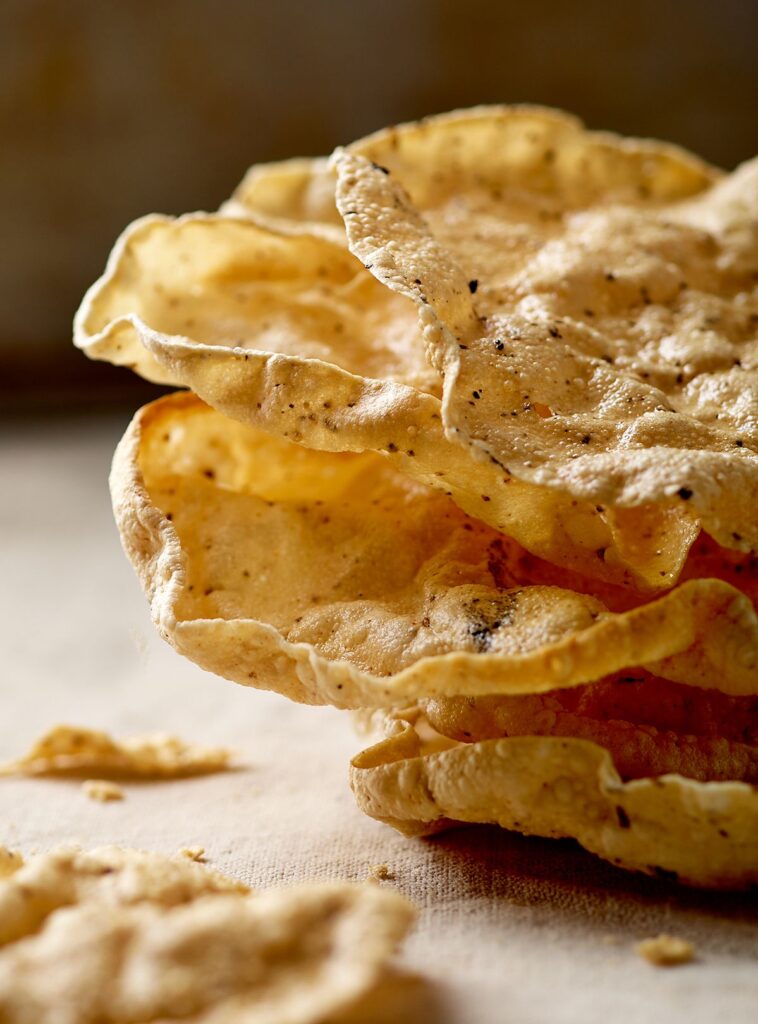
Market Overview of Indian Snacks in Indonesia
Indonesia’s packaged food import market has grown considerably, and Indian snacks occupy a small but fast-expanding niche within it. Papad, alongside products like namkeen, pickles, and spice blends, is part of a broader wave of Indian FMCG products entering Southeast Asian markets. Jakarta, as Indonesia’s largest urban and commercial hub, naturally absorbs the majority of this demand before it spreads to other cities.
What makes this market interesting for wholesale buyers is that it is still relatively underserved. Many businesses currently source small quantities through informal channels, travelers, or unreliable resellers, which leads to inconsistent supply and unpredictable pricing.
Indian snack imports into Indonesia also benefit from relatively straightforward classification under food import regulations, provided proper documentation is in place. This makes papad an accessible entry point for distributors who want to diversify into Indian FMCG products without navigating overly complex regulatory categories. As awareness grows and more retail chains begin stocking Indian snacks permanently, early movers who establish strong wholesale supplier relationships now will be better positioned as the category matures.
Why Choose Lijjat Papad Wholesale in Jakarta
Buying wholesale rather than through scattered retail channels changes the entire economics and reliability of your supply chain. When you commit to Lijjat Papad Wholesale in Jakarta sourcing, you are essentially building a dependable pipeline rather than hoping the next shipment arrives on time.
The most immediate advantage is cost. Wholesale pricing per unit is significantly lower than retail, which matters enormously for businesses operating on thin margins like restaurants and grocery retailers. Beyond cost, wholesale sourcing gives you consistency in product quality and packaging, something that matters a great deal when customers expect the same taste and texture every time they buy.
There is also the matter of supply security. A restaurant that runs out of papad mid-week because its informal supplier couldn’t deliver is a restaurant that disappoints customers and loses repeat business. Wholesale contracts with a proper Lijjat Papad Distributor in Jakarta relationship remove this uncertainty by establishing scheduled deliveries and buffer stock arrangements.
Types of Lijjat Papad Available
One thing many first-time buyers don’t realize is how many varieties of Lijjat Papad actually exist. Understanding this variety helps you plan your wholesale order more intelligently rather than ordering a single generic product.
The most commonly requested varieties for Buy Lijjat Papad in Jakarta orders include:
- Udad Papad (the classic, most widely recognized variety)
- Punjabi Masala Papad (spicier, popular with restaurants serving North Indian cuisine)
- Jeera Papad (cumin-flavored, favored for its aromatic profile)
- Plain and Lightly Spiced variants for retail shelf diversity
- Sada Papad for buyers wanting a neutral base that pairs with various dips and chutneys
Each variety has slightly different demand patterns depending on your customer base. Restaurants often prefer the classic and masala varieties because they align with familiar menu expectations, while retail grocery buyers tend to stock a mix so customers have options. Distributors supplying multiple outlet types typically request a blended wholesale order covering three to four varieties to serve different customer segments simultaneously.
Industries That Need Wholesale Papad
The demand for wholesale papad extends well beyond what most people initially assume. While Indian restaurants are the obvious buyers, the actual customer base is considerably broader.
Supermarkets and hypermarkets increasingly stock an international foods aisle, and papad fits naturally into that category alongside other imported snacks. Hotels with multicuisine restaurants or breakfast buffets use papad as a quick, authentic addition to their Indian food offerings. Catering companies serving corporate events or weddings with Indian cuisine themes need reliable bulk supply, especially during peak event seasons.
Indian grocery stores remain a core customer base, obviously, but even general Asian grocery stores have started stocking papad as consumer curiosity about Indian food grows. Cafes experimenting with fusion snacks have also begun using crushed or fried papad as a topping or side element in creative dishes, adding yet another use case for wholesale buyers.
This diversity of demand is actually good news for anyone considering entry into Wholesale Papad Supplier Jakarta sourcing — it means the category isn’t dependent on a single narrow customer type, which reduces business risk for distributors building a papad supply line.
Packaging Options
Packaging is often an overlooked detail in wholesale sourcing conversations, but it has a direct impact on shelf life, presentation, and customer trust. Export-quality papad packaging needs to protect the product from moisture, maintain crispness during transit, and survive the humidity conditions common in Jakarta’s climate.
Standard wholesale packaging typically comes in multi-unit cartons designed for distribution efficiency, with individual retail packs inside sized for direct shelf placement. This dual-layer approach means distributors can break down a bulk shipment into retail-ready units without needing to repackage anything themselves.
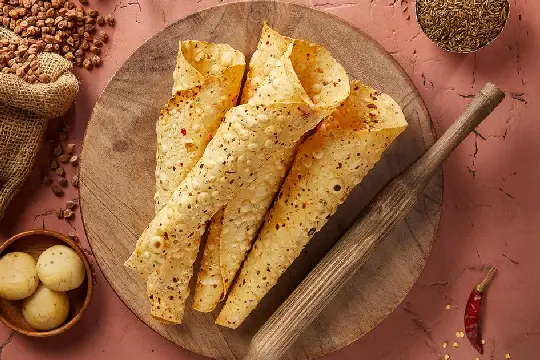
Export Standards
Quality assurance in wholesale food export isn’t a single checkpoint — it’s a continuous process spanning raw material sourcing, production, packaging, and pre-shipment inspection. A reliable supplier should be able to walk you through each of these stages when asked.
At the raw material stage, quality assurance means sourcing consistent-grade urad dal and other ingredients that meet defined specifications. During production, batch testing checks for taste consistency, texture, and moisture levels. Before shipment, pre-export inspection confirms packaging integrity and product condition, ensuring nothing that leaves the facility falls short of the agreed specification.
Certifications like FSSAI (Food Safety and Standards Authority of India) and APEDA (Agricultural and Processed Food Products Export Development Authority) registration are strong indicators that a supplier takes quality assurance seriously. Buyers sourcing Premium Indian Papad Supplier relationships should request documentation proving these certifications rather than relying on verbal assurances, since proper paperwork will also be necessary for smooth customs clearance on the Indonesian side.
Logistics and Shipping
Shipping papad from India to Jakarta involves a combination of sea freight for cost efficiency and, occasionally, air freight for smaller or time-sensitive orders. Sea freight remains the standard choice for bulk wholesale orders because it significantly reduces per-unit shipping costs, even though transit times are longer.
A typical shipment moves through a sequence of steps: production and packaging completion, pre-shipment inspection, loading into export containers, port departure from an Indian port (commonly Mumbai or Chennai depending on the exporter’s location), sea transit to Jakarta’s Tanjung Priok port, customs clearance, and final domestic delivery to the buyer’s warehouse or distribution center.
Container consolidation is a common practice for mid-sized orders, where multiple product types or multiple smaller buyers share container space to reduce individual shipping costs. Experienced exporters manage this consolidation process directly, which simplifies logistics considerably for the buyer. Working with a supplier who has established Container Export experience specifically on the India-Indonesia trade route reduces the likelihood of delays, since they already understand port-specific documentation quirks and common clearance bottlenecks.
Import Process
Understanding the import process helps buyers set realistic expectations and avoid unnecessary delays. The general flow for importing Lijjat Papad into Indonesia includes order confirmation and contract agreement, production and packaging by the exporter, pre-shipment documentation preparation, sea freight transit, arrival at Tanjung Priok port, customs assessment and duty payment, and release for domestic distribution.
Indonesian food import regulations require proper labeling in Bahasa Indonesia, accurate product classification under the correct HS code, and compliance with BPOM (Indonesia’s food and drug regulatory body) registration requirements for packaged food products. Buyers should confirm with their exporter whether they assist with BPOM registration support or whether this responsibility falls entirely on the importing business, as this varies between suppliers.
Documents Required
Proper documentation is the backbone of smooth customs clearance, and missing paperwork is one of the most common causes of shipment delays. For Lijjat Papad Wholesale in Jakarta imports, buyers should expect and request the following standard export documents from their supplier:
- Commercial Invoice detailing product, quantity, and agreed pricing
- Packing List specifying carton counts and weights
- Bill of Lading confirming shipment and vessel details
- Certificate of Origin verifying the product’s Indian origin
- Health/Food Safety Certificate confirming compliance with food safety standards
- Fumigation Certificate (where applicable for wooden packaging materials)
On the Indonesian side, buyers are also responsible for ensuring BPOM registration and correct HS code classification are handled before the shipment arrives, since incomplete import-side paperwork can hold a shipment at port even when the exporter’s documentation is flawless. A supplier experienced in Import Documentation for the Indonesian market can often guide buyers through this process, reducing the learning curve considerably for first-time importers.
Storage Tips
Once papad arrives in Jakarta, proper storage becomes essential to preserving shelf life and product quality, especially given the region’s humidity. Papad should be stored in a cool, dry environment away from direct sunlight and moisture exposure, ideally in climate-controlled warehouse conditions if handling large bulk quantities.
Cartons should remain sealed until ready for distribution, and once opened, individual retail packs should be kept in airtight conditions to prevent moisture absorption, which causes papad to lose its characteristic crispness. Distributors managing multiple outlets should establish a first-in-first-out (FIFO) inventory rotation system to ensure older stock moves before newer shipments, maintaining consistent freshness across all retail points.
For retailers, shelf placement away from direct heat sources — such as near windows or under strong lighting — helps extend product shelf life further. These storage practices matter more in Jakarta’s tropical climate than they might in drier markets, so it’s worth building proper storage protocols into your distribution planning from day one rather than treating it as an afterthought.
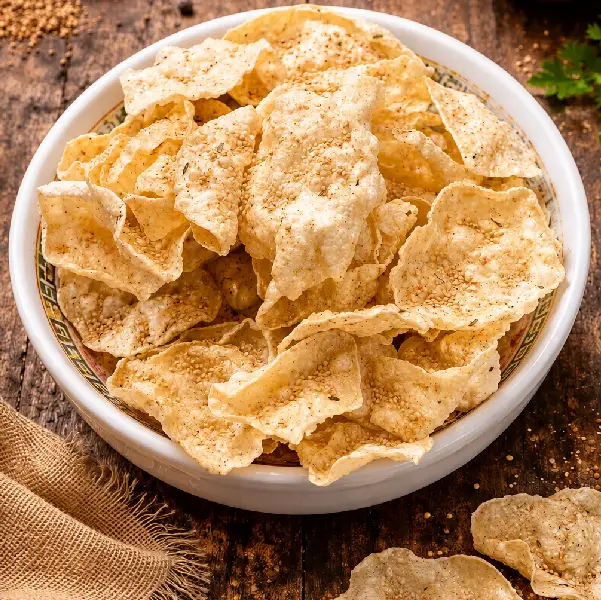
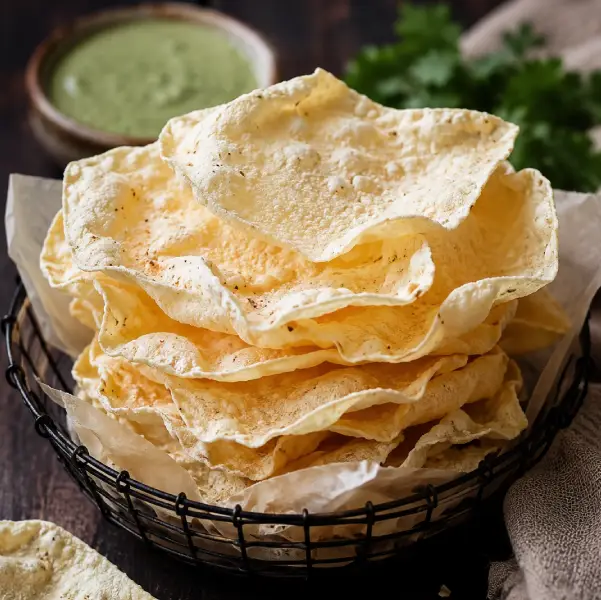
Pricing Factors
Wholesale pricing for Lijjat Papad isn’t a fixed number — it fluctuates based on several factors that buyers should understand before negotiating. Order volume is the most obvious factor, with larger bulk orders naturally securing better per-unit pricing due to production and shipping economies of scale.
Product variety also affects pricing, since specialty flavors like Punjabi Masala or Jeera variants sometimes carry a modest premium over the classic Udad Papad due to additional ingredient costs. Packaging customization, including private labeling or custom carton sizing, typically adds a small cost premium reflecting the production adjustment required.
Shipping method plays a significant role as well — sea freight remains considerably more economical than air freight, though it requires longer lead time planning. Currency exchange fluctuations between the Indian Rupee and Indonesian Rupiah can also shift pricing slightly over time, which is why many exporters offer pricing validity windows rather than indefinite fixed quotes.
Buyers evaluating Lijjat Papad Wholesale Price in Jakarta should request itemized quotes that separate product cost, packaging cost, and shipping cost, since this transparency makes it much easier to compare different suppliers on a fair, apples-to-apples basis rather than comparing bundled totals that may hide inconsistent margins.
Why Choose OM EXIM TRADERS
Sourcing decisions ultimately come down to trust, consistency, and execution — and this is where OM EXIM TRADERS has built its reputation as a dependable Indian FMCG exporter serving international B2B buyers, including businesses across Indonesia.
OM EXIM TRADERS brings genuine export expertise to every order, backed by a clear understanding of the documentation, packaging, and logistics requirements specific to the Indonesian market. Every batch shipped meets export-quality standards, with international-grade packaging designed to withstand the humidity and transit conditions common on the India-Jakarta shipping route.
What distinguishes OM EXIM TRADERS from smaller, less experienced exporters is the combination of competitive wholesale pricing with reliable, on-schedule delivery. Buyers don’t just get a good price — they get a supplier who understands that missed deadlines translate directly into lost business for the client. The company also maintains thorough export documentation practices, which significantly reduces the risk of customs delays on the receiving end.
Beyond the transactional side, OM EXIM TRADERS focuses on building long-term business partnerships rather than one-off sales. This means ongoing customer support, flexibility for custom packaging or private label requests, and a genuine willingness to accommodate growing order volumes as a distributor’s business scales. For buyers researching a Lijjat Papad Bulk Supplier they can rely on for years rather than months, this partnership-first approach makes a measurable difference.
Why Import from India
India remains the natural sourcing origin for authentic Lijjat Papad, and this isn’t just a matter of brand authenticity — it comes down to production expertise, ingredient sourcing, and manufacturing scale that has been refined over decades. Indian manufacturers have deep, generational experience producing papad at scale while maintaining traditional taste and texture standards.
Cost efficiency is another major advantage. Sourcing directly from India, rather than through secondary distributors in other countries, cuts out unnecessary markup layers, allowing wholesale buyers in Jakarta to access more competitive pricing than they would through indirect channels.
India’s established export infrastructure for FMCG products also means shipping routes, documentation processes, and quality certification systems are well-developed and predictable. This maturity reduces the operational risk that often comes with sourcing from less established supply chains, giving buyers greater confidence in consistent, repeatable order fulfillment over time.
Final Thoughts
Sourcing Lijjat Papad Wholesale in Jakarta is no longer a niche or complicated endeavor when you understand the process and work with an experienced exporter. From understanding product varieties and packaging options to navigating shipping logistics and import documentation, every step becomes significantly more manageable once you know what to expect and what questions to ask potential suppliers.
The growing demand for authentic Indian snacks in Jakarta represents a real, sustainable business opportunity for distributors, retailers, restaurants, and hotels willing to establish reliable wholesale supply relationships now rather than later. As this category continues to mature in the Indonesian market, businesses that build strong supplier partnerships early will be best positioned to meet rising customer demand consistently and profitably.
Contact OM EXIM TRADERS
If you’re ready to explore Lijjat Papad Wholesale in Jakarta sourcing with a supplier who understands both export quality and Indonesian import requirements, OM EXIM TRADERS is available to discuss your wholesale needs, provide detailed pricing quotes, and guide you through the entire ordering and shipping process. Reach out today to start building a dependable, long-term Lijjat Papad supply partnership for your business.
Frequently Asked Questions (FAQs) about Lijjat Papad Wholesale in Jakarta
Minimum order quantities vary by supplier, but wholesale orders are typically structured around container-share or full-container volumes to maximize shipping cost efficiency.
Sea freight shipments generally take several weeks in transit, plus additional time for customs clearance, so buyers should plan for a total timeline of four to eight weeks from order confirmation.
Yes, many exporters offer custom packaging and private label options for bulk orders, though this typically requires a higher minimum order volume.
Buyers need standard export documents from the supplier plus Indonesian-side compliance items like BPOM registration and correct HS code classification.
Yes, papad should be stored in a cool, dry, moisture-free environment, which is especially important given Jakarta's humid climate.
Some suppliers offer flexible order tiers for smaller businesses, though pricing efficiency generally improves with larger volumes.
Common export varieties include Udad Papad, Punjabi Masala Papad, Jeera Papad, and Sada Papad, among others.
Pricing depends on order volume, product variety, packaging customization, and shipping method, among other factors.
Yes, export-quality papads follow stricter moisture control, batch testing, and packaging standards designed to survive international transit.
OM EXIM TRADERS offers export expertise, competitive pricing, reliable logistics, thorough documentation, and a partnership-focused approach to long-term buyers.
Explore More
Order Now
+91 9040030306
info@omeximtraders.com