
Indian Food Export Market in UAE
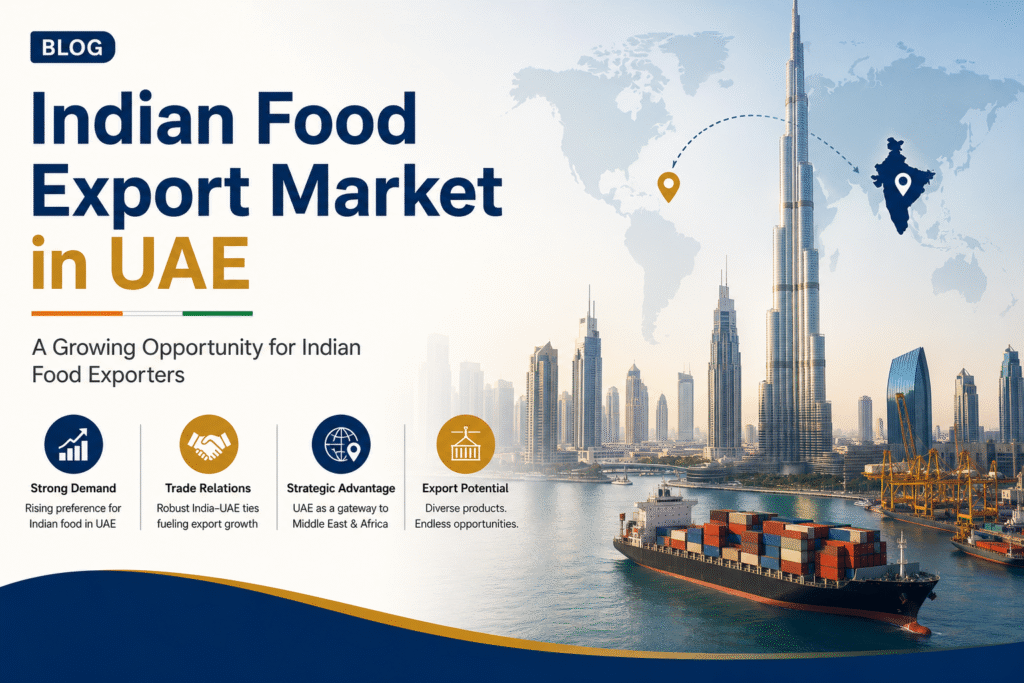
Indian Food Export Market in UAE Home > Indian Food Export Market in UAE Indian Food Export Market in UAE: Complete Guide for Exporters, Suppliers & Wholesale Businesses The Indian food export market in UAE has grown far beyond what most industry insiders expected even five years ago. Walk through the bustling aisles of a Lulu Hypermarket in Dubai or a Carrefour in Abu Dhabi, and the shelf space dedicated to Indian packaged foods, snacks, spices, and frozen products tells a story louder than any trade report. For food exporters, distributors, and wholesale businesses looking to build serious revenue in the Gulf, the UAE is not just a market — it is a launchpad. This guide covers everything you need to know: why the demand is surging, what products are moving fastest, how the export process works, what regulations you must comply with, and how to find trustworthy partners in the region. Whether you are a seasoned Indian food exporter or someone just beginning to explore the food export business UAE, this article gives you the ground-level intelligence to move forward with confidence. Overview of the Indian Food Export Market in UAE The Indian food export market in UAE sits at the intersection of geography, diaspora, and genuine appetite for quality. The UAE imported food products worth over USD 12 billion in recent years, and Indian products make up a significant and growing share of that figure. Spices, rice, packaged snacks, frozen foods, lentils, flour, pickles, ready-to-eat meals — the category is wide and the demand is consistent. What makes this market particularly attractive is its layered consumer base. You have Indian expats who grew up eating specific regional brands and actively seek them out abroad. You have Pakistani, Bangladeshi, Sri Lankan, and Nepali communities with overlapping food preferences. And increasingly, you have Emirati and Western consumers curious about Indian ethnic food — drawn in by the flavors, the health credentials of certain products, and the visible presence of Indian cuisine across UAE’s food culture. The Indian food export market in UAE is not a niche. It is a mainstream commercial opportunity with stable repeat demand, multiple retail and distribution channels, and regulatory access that, while requiring preparation, is well-defined and navigable. Growing Demand for Indian Snacks and FMCG Products The UAE demand for Indian snacks continues rising rapidly. Products like bhujia, sev, khakhra, banana chips, chakli, mixtures, roasted snacks, and flavored namkeen have become household staples for many Indian families in the Gulf. Indian FMCG export UAE categories are also witnessing growth through convenience-focused buying behavior. Consumers prefer packaged products that offer: Longer shelf life Familiar Indian taste Affordable pricing Easy storage Ready-to-consume convenience Retail chains in Dubai and Sharjah actively source Indian packaged snacks because turnover is strong and customer loyalty remains high. OM Exim Traders has successfully supported several distributors by supplying export-quality namkeen and packaged snack products tailored for Gulf consumers. Why UAE is a Huge Opportunity for Indian Food Exporters The UAE’s open economy, world-class ports, and status as a regional re-export hub give Indian food exporters a structural advantage that few other destination markets offer. Jebel Ali Port in Dubai is one of the busiest container ports in the world. Getting Indian products into UAE and then distributed across the broader GCC region — Saudi Arabia, Oman, Qatar, Kuwait, Bahrain — becomes logistically feasible in ways that simply are not possible with many other markets.Beyond logistics, the UAE offers genuine commercial depth. It has a high per capita income, a large expatriate population that spends meaningfully on familiar food, and retail infrastructure — hypermarkets, ethnic grocery stores, e-commerce platforms — that is sophisticated enough to move volume quickly. Expansion of Indian Grocery Stores in Dubai and Abu Dhabi The number of Indian grocery stores in Dubai alone has multiplied steadily over the past decade. Areas like Bur Dubai, Meena Bazaar, Al Karama, and Deira are home to hundreds of grocery outlets and wholesale importers that specifically source Indian food products. Abu Dhabi’s Mohammed Bin Zayed City area tells a similar story. These stores are not just retail endpoints. Many function as wholesale Indian food suppliers UAE, distributing to smaller retailers, restaurants, and catering businesses across each emirate. For Indian exporters, establishing a reliable relationship with even a handful of these wholesalers can create recurring, high-volume business that compounds over time. Role of Indian Expats in UAE Food Demand Around 3.5 million Indians live in the UAE, making them the largest expatriate community in the country. These are not temporary visitors — many have built lives, careers, and families in the UAE over decades. Their food preferences are specific, emotionally tied to home, and commercially powerful. When an Indian family in Sharjah wants Haldiram’s bhujia, or a Telugu family in Dubai craves a particular brand of murukku, they will go to the store that stocks it. Retailers know this. Distributors know this. Smart exporters know this too. The Indian food export market in UAE is, in large part, a market shaped and sustained by this community. Top Products in the Indian Food Export Market in UAE Understanding what products drive the market is the foundation of any successful export strategy. The Indian food export market in UAE covers a wide range of categories, but some products consistently outperform others in terms of volume, margins, and repeat purchase rates. Indian Spices Export UAE Indian spices hold a position of particular strength. Cumin, coriander, turmeric, cardamom, red chili, garam masala blends, and biryani masala mixes are in constant demand. The Indian spices export UAE market benefits from the fact that Indian spices are genuinely superior in aroma and potency compared to many competing origins — this is recognized by consumers across nationalities. For exporters, spice packaging matters enormously in UAE. Retail packs need Arabic labeling, clear shelf-life information, and FSSAI compliance. Bulk packs for food service and restaurant distribution have different but equally strict requirements. Papad Export to UAE Papad export to UAE is a segment
Lijjat papad wholesale price guide
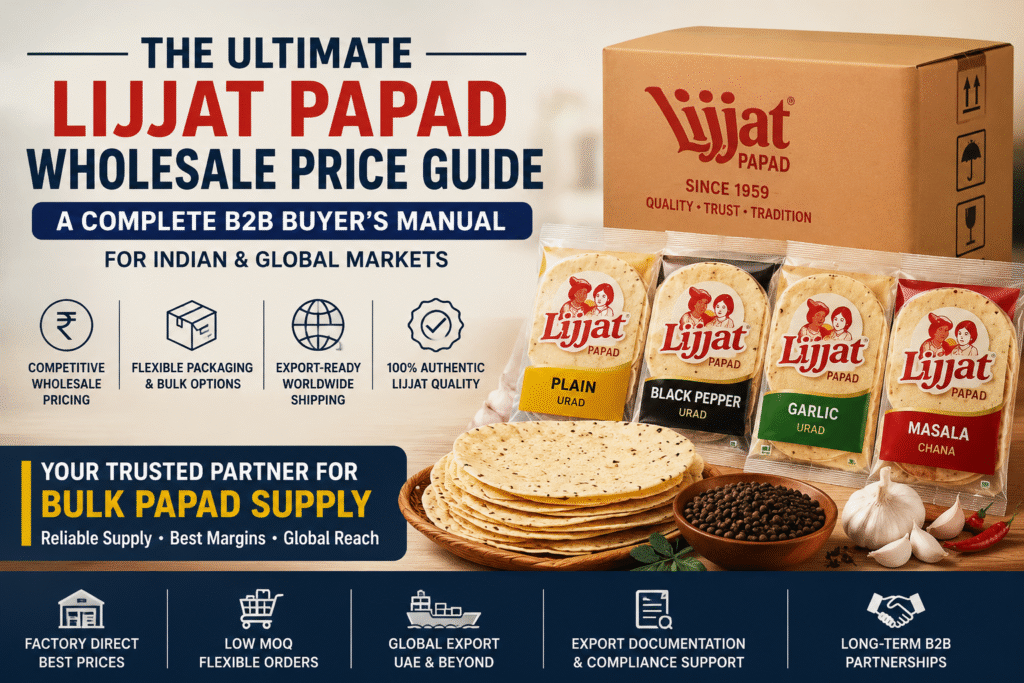
Lijjat Papad Wholesale Price Guide Home > Lijjat Papad Wholesale Price Guide The Ultimate Lijjat Papad Wholesale Price Guide The global appetite for authentic Indian FMCG products has skyrocketed over the last decade, and standing firmly at the pinnacle of this culinary demand is the humble, crispy, and universally loved Indian papadum. Whether it is a traditional household dinner in Mumbai, a bustling street-side food stall in Delhi, or a premium fine-dining Indian restaurant in Dubai, papad remains an indispensable culinary accompaniment. For businesses operating within the FMCG supply chain, grocery retail, hospitality, or international food import-export sectors, understanding the financial dynamics of this product is crucial. Navigating these dynamics requires a reliable Lijjat papad wholesale price guide to understand structural costs, optimize procurement budgets, establish robust profit margins, and partner with dependable supply chain allies like OM Exim Traders. This specific Lijjat papad wholesale price guide is designed to give global buyers a complete analytical map of the industry. Sourcing these high-demand items requires more than just finding a vendor; it necessitates a deep understanding of standard wholesale Lijjat papad rates, volatile regional logistics, bulk scaling factors, and international export compliances. This extensive industry manual provides an analytical breakdown of market economics, procurement strategies, and global shipping setups. It serves as a definitive Lijjat papad wholesale price guide to help smart B2B buyers navigate the landscape, optimize operational costs, and maximize profitability. Reading through a structured Lijjat papad wholesale price guide helps businesses eliminate intermediate losses and secure higher profit percentages. Introduction to the Lijjat Papad Wholesale Industry The Indian papad industry is a brilliant example of grassroots entrepreneurship, cultural heritage, and incredible commercial scale. At the center of this multi-million dollar sector is the Shri Mahila Griha Udyog Lijjat Papad, an extraordinary cooperative movement that empowered thousands of women across India while creating one of the most recognizable snack brands in South Asia. What started as a modest venture with a borrowed sum of just eighty rupees has evolved into a dominant market force. For commercial buyers, wholesalers, and international food importers, utilizing a Lijjat papad wholesale price guide helps clarify how this massive scale impacts unit economics across regional supply lines. Operating successfully within the Indian papad wholesale market requires recognizing that this is a high-volume, steady-margin business. Unlike niche gourmet items that carry premium markups but suffer from low turnover, fast-moving consumer goods like Lijjat papad depend entirely on rapid inventory rotation. Because consumers actively seek out this specific brand by name, wholesale buyers do not need to spend heavily on marketing or consumer education. Instead, the core operational focus must shift entirely toward sourcing efficiency, minimizing domestic transport costs, securing reliable allocation from a stable papad manufacturing company India, and tracking the Lijjat papad distributor price to protect your bottom line against sudden market shifts. A well-researched Lijjat papad wholesale price guide serves as an essential tool for training procurement teams. Current Papad Market Trends in India The Indian snack and traditional savory market is undergoing a major structural transformation driven by changing consumer habits, modern retail setups, and rising international interest. Today’s buyers are moving away from unbranded, open-air loose goods in favor of hygienic, standardized, and laboratory-tested branded items. This shift has triggered an unprecedented surge in demand across the papad wholesale business, as modern supermarkets, boutique grocery stores, and cloud kitchens refuse to stock uncertified foods that present potential health or consistency risks. Keeping a modern Lijjat papad wholesale price guide handy allows storefront owners to anticipate these demand shifts and secure product inventory before seasonal shortages occur. Additionally, the integration of traditional Indian side dishes into global culinary spaces has expanded the market beyond just regional Indian households. International fusion restaurants, European vegan chains, and cross-cultural snack brands are increasingly utilizing crispy papads as a gluten-free, low-calorie alternative to traditional taco shells, chips, or crackers. This expanding consumer base guarantees that wholesale buyers entering this space enjoy sustained, long-term market velocity, shielding them from the sharp demand drops often seen in cyclical or trend-heavy food sectors. Complete Lijjat Papad Wholesale Price Guide When developing a commercial procurement budget or executing a Lijjat papad bulk purchase, buyers must realize that wholesale pricing fluctuates based on localized distribution networks, bulk volume tiers, transport distances, and specific product flavors. To give procurement managers, supermarket category heads, and export firms a clear operational baseline, the following comprehensive pricing matrix outlines estimated bulk pricing structures observed across the primary papad wholesale market India. Estimated Bulk Pricing Matrix Papad Variety & Flavor Pack Weight Case Configuration Wholesale Price Per Case Wholesale Price Per KG Udad Plain Papad 200g 80 Packs / Carton ₹2,800 – ₹3,100 ₹175 – ₹193 Udad Black Pepper (Kali Mirch) 200g 80 Packs / Carton ₹2,900 – ₹3,200 ₹181 – ₹200 Udad Garlic (Lasun) Papad 200g 80 Packs / Carton ₹3,050 – ₹3,350 ₹190 – ₹209 Moong Special Papad 250g 60 Packs / Carton ₹2,850 – ₹3,150 ₹190 – ₹210 Moong Punjabi Masala 250g 60 Packs / Carton ₹2,950 – ₹3,250 ₹196 – ₹216 Chana Masala Papad 200g 80 Packs / Carton ₹3,100 – ₹3,400 ₹193 – ₹212 Jeera (Cumin) Papad 200g 80 Packs / Carton ₹2,950 – ₹3,200 ₹184 – ₹200 Note: The pricing figures provided in this comprehensive Lijjat papad wholesale price guide are realistic industry estimates compiled from major trading hubs. Actual spot pricing can vary based on raw material costs, seasonal changes, transport costs, and order volumes. For real-time commercial quotes tailored to your delivery region, consulting an established sector specialist like OM Exim Traders is highly recommended. When analyzing this Lijjat papad wholesale price guide, look closely at the cost breakdown per kilogram. While retail buyers often pay a premium for individual small packs, commercial entities purchasing at a Lijjat papad carton price level unlock significant volume discounts. These discounts form the foundation of downstream profitability for regional sub-distributors, supermarket chains, and international maritime exporters alike. Current Papad Market Trends in India The Indian snack and traditional savory
Best Indian Snacks Suppliers in UAE
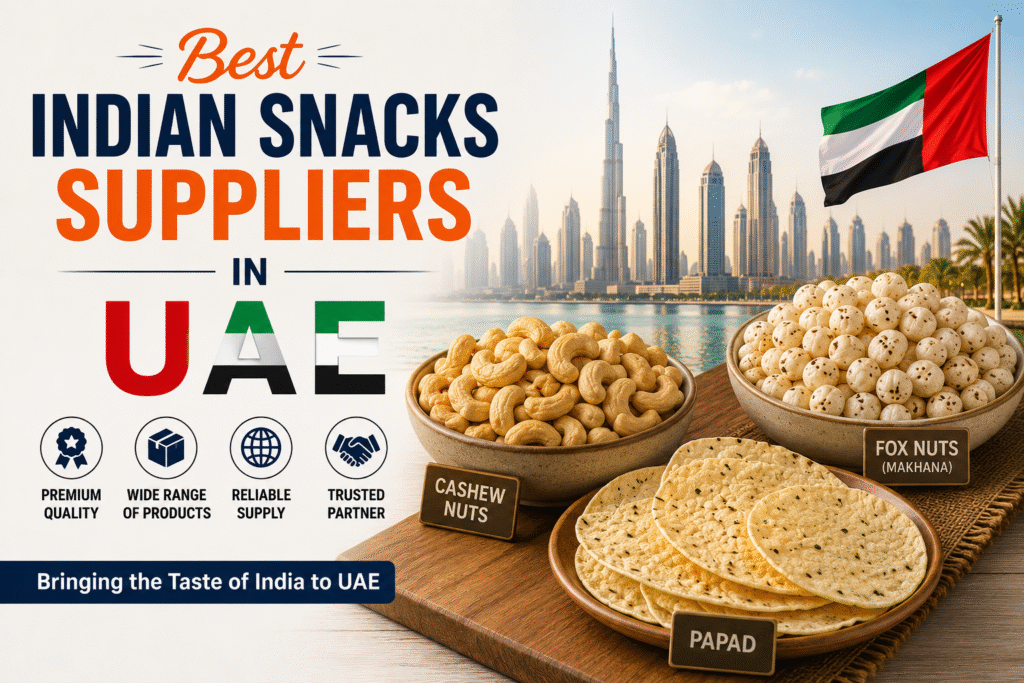
Best Indian Snacks Suppliers in UAE Home > Best Indian Snacks Suppliers in UAE Best Indian Snacks Suppliers in UAE: The Ultimate B2B Wholesale Guide The United Arab Emirates has transformed into a melting pot of global cultures, with the South Asian diaspora making up a massive percentage of its resident population. Alongside this demographic foundation, local Emiratis and Western expatriates have developed a deep appreciation for the complex, bold, and diverse flavors of Indian street food and traditional savories. Consequently, the commercial demand for authentic Indian namkeen, chips, and ready-to-eat items across Dubai, Abu Dhabi, Sharjah, and the northern emirates has reached an all-time high. For supermarkets, hypermarkets, specialized grocery boutique owners, hospitality procurement managers, and catering businesses, finding the right distribution partner is a critical operational decision. Navigating international supply chains, maintaining strict regional compliance, and ensuring that the taste profile remains uncompromised require an experienced partner. This comprehensive guide breaks down the commercial ecosystem of sourcing traditional savories, highlighting why OM Exim Traders stands out as an industry leader among the best Indian snacks suppliers in UAE. UAE Snack Market Overview The consumer food landscape in the UAE is characterized by premium purchasing power, high urban density, and an institutional reliance on imported goods. According to recent market insights, the packaged food sector in the GCC is expanding rapidly, with the UAE leading the charge in per capita snack consumption. The retail environment is dominated by major hypermarket chains like Lulu, Carrefour, and Spinneys, alongside thousands of high-traffic neighborhood grocery stores (“baqalas”) and a rapidly expanding e-commerce delivery ecosystem. In the snack segment, traditional savory items now compete directly with western potato chips and standard snack bars. Corporate offices, educational institutions, and domestic households consume massive volumes of finger foods weekly. This commercial volume makes it highly profitable for local food businesses to source directly from top-tier Indian snacks wholesalers UAE to secure sustainable margins and continuous inventory flow. Growing Demand for Indian Snacks in UAE The market requirement for authentic snacks is no longer confined to specific festive periods or seasonal gatherings. It is a sustained, year-round multi-million-dollar industry. The modern consumer wants immediate access to clean-label, high-quality, and structurally sound packaged foods that replicate the exact flavor memories of regional India. Furthermore, the fast-paced lifestyle in major corporate hubs like the Dubai International Financial Centre (DIFC) and Abu Dhabi Global Market (ADGM) has boosted the sales of single-serve, grab-and-go snack pouches. Importers and local distributors are constantly looking for a scalable bulk Indian snacks supplier Dubai who can ship consistent product qualities without introducing shipping delays. Why Indian Snacks Are Popular in Dubai & UAE The enduring popularity of Indian namkeen and savories in the Middle East boils down to three primary socio-economic factors: Cultural Familiarity and Expatriate Demographics: Over three million Indian nationals reside in the UAE, establishing a permanent structural demand for home country comfort foods. The Tea Time Culture (“Chai Shai”): The daily ritual of evening tea is deeply rooted among South Asian and Arab households alike, creating a massive secondary market for bulk tea time snacks wholesale. Flavor Complexity and Variety: Unlike western snacks that rely heavily on basic salt or cheese flavorings, Indian savories utilize functional spices like cumin, turmeric, black salt, and dry mango powder, providing an addictive sensory experience that appeals to all nationalities. To capture this diverse consumer interest, regional businesses must align with experienced Indian food distributors UAE who possess deep insights into regional taste variations, ranging from the mild, sweet-savory mixes of Gujarat to the fiery, spice-forward fried lentils of Southern India. Types of Indian Snacks in UAE Market The operational inventory requirements of a UAE retail business are highly diverse. To satisfy the consumer base, a comprehensive supply portfolio must include several distinct product categories: Traditional Indian Namkeen This category includes high-volume items like Sev, Bhujia, Gathiya, Chana Chur, and complex mixture profiles (Cornflakes Mixture, Navratan Mixture, and Kashmiri Chivda). These items form the backbone of retail sales shelves and are heavily supplied by premium Indian namkeen suppliers in UAE. Flatbreads and Dehydrated Staples Traditional, light crunch items such as handmade Khakhra (available in methi, jeera, and masala flavors), mini Bhakharwadi, and various flavored papads (like moong dal, urad dal, and garlic papad) serve as excellent options for health-conscious buyers. These consumers prefer roasted or low-oil alternatives to fried items. Sourcing these items through a trusted, professional papad suppliers UAE network ensures that these highly delicate, brittle products arrive at your warehouse without structural shattering, moisture degradation, or oil sweating. Modern Fusion and Extruded Snacks Spicy potato chips seasoned with regional chaat masala, crisp banana chips prepared in pure coconut oil, and puffed rice or corn-based extruded treats appeal directly to children, teenagers, and younger consumers who enjoy intense, tangy flavor profiles. The fast-moving nature of this segment makes the selection of a qualified, agile Indian chips suppliers UAE partner critical for ensuring rapid retail turnover and capturing spontaneous, impulse-buy revenue at checkouts. Best Indian snacks suppliers in UAE When closely reviewing the competitive field of commercial entities servicing the Middle East food import sector, B2B procurement managers must look past simple price-per-kilogram metrics. True supply chain value does not come from ultra-cheap, unverified sources; it lies in structural consistency, clear administrative support, and complete regulatory compliance. Shifting to an unauthorized or informal supplier frequently results in product confiscation at the port of entry, causing catastrophic financial losses. Supplier Criteria Tier-1 Importers / Exporters (OM Exim Traders) Low-Cost Informal Traders Regulatory Clearances Complete documentation, FSSAI certified, export-ready compliance, smooth customs clearance support Missing paperwork, incomplete certifications, high risk of customs rejection Packaging Standards Multi-layer vacuum packing, nitrogen flushed, UV protection, long shelf life assurance Low-grade plastic packaging, weak sealing, moisture damage risk Shipping & Logistics Consolidated container shipping, temperature control, scheduled global sailings Unorganized shipping, delays, no climate control, frequent damage Sourcing Quality Direct factory sourcing, consistent flavor, verified quality checks Middle-market sourcing, inconsistent quality, old stock issues Pricing Stability Transparent wholesale pricing,
How To Import Papad In UAE
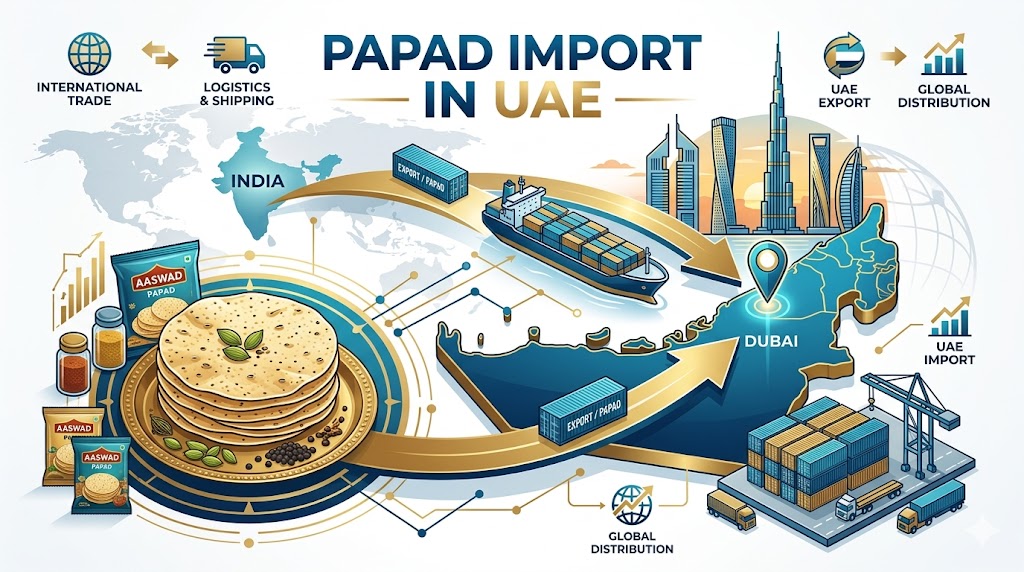
How to Import Papad in UAE Home > How to Import Papad in UAE How to Import Papad in UAE: The Ultimate Step-by-Step Guide for Indian Exporters and UAE Buyers The United Arab Emirates (UAE) represents one of the most vibrant, consumption-driven food markets in the Middle East. With a diverse, multicultural population where South Asian expatriates comprise a massive demographic segment, the demand for authentic traditional food products is consistently scaling new heights. Among these products, the humble Indian papad—a thin, crisp, disc-shaped food typically made from seasoned dough of peeled black gram flour, lentils, chickpeas, or rice—has evolved from a traditional household accompaniment into a commercial powerhouse. For entrepreneurs, retail chains, and food distributors aiming to capture this lucrative segment, understanding how to import papad in UAE is the definitive gateway to a highly profitable business venture. The global landscape of ethnic food trading requires a meticulous approach to international logistics, regulatory compliance, and strategic sourcing. Navigating the commercial corridor between India and the emirates demands more than just a basic understanding of trade; it requires an operational roadmap. When business owners discover how to import papad in UAE, they open doors to a snack industry that thrives across supermarkets, corner grocery stores, luxury dining spaces, and wholesale markets alike. This comprehensive guide breaks down every critical component of the import ecosystem, ensuring that your enterprise minimizes risk, avoids customs bottlenecks, and builds a sustainable supply chain. Establishing a footprint in the Arabian Peninsula’s food sector requires aligning with partners who possess deep domain expertise in cross-border food logistics. Reliable supply networks are the bedrock of this trade. Experienced export houses, such as OM Exim Traders, play an instrumental role in bridging the gap between high-quality Indian manufacturing facilities and the stringent import structures of the Gulf Cooperation Council (GCC). By leveraging the specialized export capabilities of a dedicated partner, businesses can navigate the complexities of how to import papad in UAE with absolute confidence, transforming regulatory hurdles into structured milestones for corporate growth. Why Papad Demand is Growing in UAE The consumer landscape of the UAE is structurally unique. It is characterized by high disposable income, rapid urbanization, and an deep-seated appreciation for global cuisines. Within this environment, packaged food products that offer convenience, extended shelf life, and authentic regional flavors experience sustained market growth. To understand how to import papad in UAE, one must first analyze the core market drivers that make this specific product an indispensable asset for retail portfolios and food service entities across the country. Indian food market in Dubai Dubai has firmly established itself as the culinary and commercial hub of the Middle East. The Indian food market in Dubai is no longer restricted to specialized ethnic enclaves; it has thoroughly penetrated mainstream consumer segments. From high-end fine dining establishments in the Dubai International Financial Centre (DIFC) serving avant-garde fusion appetizers to the bustling cafeterias of Deira and Bur Dubai, Indian culinary elements are ubiquitous. Papad serves as a versatile item within this ecosystem—acting as a complimentary table starter, a crunchy texture element in modern culinary plates, and a standalone snack. The sheer volume of food service establishments requiring consistent, high-volume wholesale shipments is a prime reason why mastering how to import papad in UAE has become a priority for commercial food procurement managers. Demand among Indian expatriates Demographic data continuously highlights that South Asians, particularly Indian nationals, form the largest expatriate community in the UAE. This massive population maintains a strong psychological and cultural connection to traditional dietary habits. For millions of residents, a meal is incomplete without the familiar crunch of a well-prepared papad. This deep-seated cultural consumption habit creates an insulated, recession-proof demand curve. Whether it is a daily lunch accompaniment or an essential item for major festivals like Diwali, Eid, and Navratri, the consumption volumes remain exceptionally high. When evaluating how to import papad in UAE, traders are essentially targeting a captive consumer market that views this product as a daily necessity rather than an occasional luxury purchase. Growth of packaged Indian snacks Modern consumer trends across the emirates show a distinct shift toward premium, hygienically packaged, and portion-controlled snack items. The overall growth of packaged Indian snacks in the region is outperforming many traditional snack categories. Consumers are increasingly seeking out clean-label, preservative-free, and authentically spiced alternatives to standard potato chips and corn snacks. Papad fits perfectly into this wellness-oriented paradigm; it is naturally gluten-free, can be roasted instead of fried, and is packed with lentil-based protein. As modern hypermarkets allocate more shelf space to international ethnic snacks, learning how to import papad in UAE provides importers with a high-margin product that aligns precisely with contemporary consumer health and convenience trends. Complete Guide on How to Import Papad in UAE Transforming a commercial ambition into an operational reality requires a structured approach to the international trade lifecycle. The process of moving dry food products across international borders involves distinct phases, each demanding careful execution. Below is the definitive, step-by-step operational framework illuminating exactly how to import papad in UAE, designed to take an enterprise from initial market assessment to final retail distribution. Step-by-step import process Market Research Before capital is deployed, comprehensive market research must be executed within the specific emirates targeted for entry. Importers need to analyze local taste preferences, which vary significantly between regions. For instance, the consumer profile in Dubai might lean toward premium, low-sodium, or uniquely flavored variations, while the wholesale market in Sharjah or Ajman may demand high-volume, traditional Udad and garlic-flavored variants. Research must also encompass price-point mapping across major retail chains, analysis of competitor packaging sizes (such as 100g bags versus 500g commercial packs), and an assessment of seasonal demand spikes. Understanding these nuances is the foundational element of how to import papad in UAE successfully. Choosing Suppliers The longevity of an import business depends entirely on the reliability, capacity, and compliance of the chosen manufacturing partner. When learning how to import papad in UAE, one discovers that the