
Lijjat Papad Wholesale Price Guide
Home > Lijjat Papad Wholesale Price Guide
The Ultimate Lijjat Papad Wholesale Price Guide
The global appetite for authentic Indian FMCG products has skyrocketed over the last decade, and standing firmly at the pinnacle of this culinary demand is the humble, crispy, and universally loved Indian papadum. Whether it is a traditional household dinner in Mumbai, a bustling street-side food stall in Delhi, or a premium fine-dining Indian restaurant in Dubai, papad remains an indispensable culinary accompaniment. For businesses operating within the FMCG supply chain, grocery retail, hospitality, or international food import-export sectors, understanding the financial dynamics of this product is crucial. Navigating these dynamics requires a reliable Lijjat papad wholesale price guide to understand structural costs, optimize procurement budgets, establish robust profit margins, and partner with dependable supply chain allies like OM Exim Traders. This specific Lijjat papad wholesale price guide is designed to give global buyers a complete analytical map of the industry.
Sourcing these high-demand items requires more than just finding a vendor; it necessitates a deep understanding of standard wholesale Lijjat papad rates, volatile regional logistics, bulk scaling factors, and international export compliances. This extensive industry manual provides an analytical breakdown of market economics, procurement strategies, and global shipping setups. It serves as a definitive Lijjat papad wholesale price guide to help smart B2B buyers navigate the landscape, optimize operational costs, and maximize profitability. Reading through a structured Lijjat papad wholesale price guide helps businesses eliminate intermediate losses and secure higher profit percentages.
Introduction to the Lijjat Papad Wholesale Industry
The Indian papad industry is a brilliant example of grassroots entrepreneurship, cultural heritage, and incredible commercial scale. At the center of this multi-million dollar sector is the Shri Mahila Griha Udyog Lijjat Papad, an extraordinary cooperative movement that empowered thousands of women across India while creating one of the most recognizable snack brands in South Asia. What started as a modest venture with a borrowed sum of just eighty rupees has evolved into a dominant market force. For commercial buyers, wholesalers, and international food importers, utilizing a Lijjat papad wholesale price guide helps clarify how this massive scale impacts unit economics across regional supply lines.
Operating successfully within the Indian papad wholesale market requires recognizing that this is a high-volume, steady-margin business. Unlike niche gourmet items that carry premium markups but suffer from low turnover, fast-moving consumer goods like Lijjat papad depend entirely on rapid inventory rotation. Because consumers actively seek out this specific brand by name, wholesale buyers do not need to spend heavily on marketing or consumer education. Instead, the core operational focus must shift entirely toward sourcing efficiency, minimizing domestic transport costs, securing reliable allocation from a stable papad manufacturing company India, and tracking the Lijjat papad distributor price to protect your bottom line against sudden market shifts. A well-researched Lijjat papad wholesale price guide serves as an essential tool for training procurement teams.
Current Papad Market Trends in India
The Indian snack and traditional savory market is undergoing a major structural transformation driven by changing consumer habits, modern retail setups, and rising international interest. Today’s buyers are moving away from unbranded, open-air loose goods in favor of hygienic, standardized, and laboratory-tested branded items. This shift has triggered an unprecedented surge in demand across the papad wholesale business, as modern supermarkets, boutique grocery stores, and cloud kitchens refuse to stock uncertified foods that present potential health or consistency risks. Keeping a modern Lijjat papad wholesale price guide handy allows storefront owners to anticipate these demand shifts and secure product inventory before seasonal shortages occur.
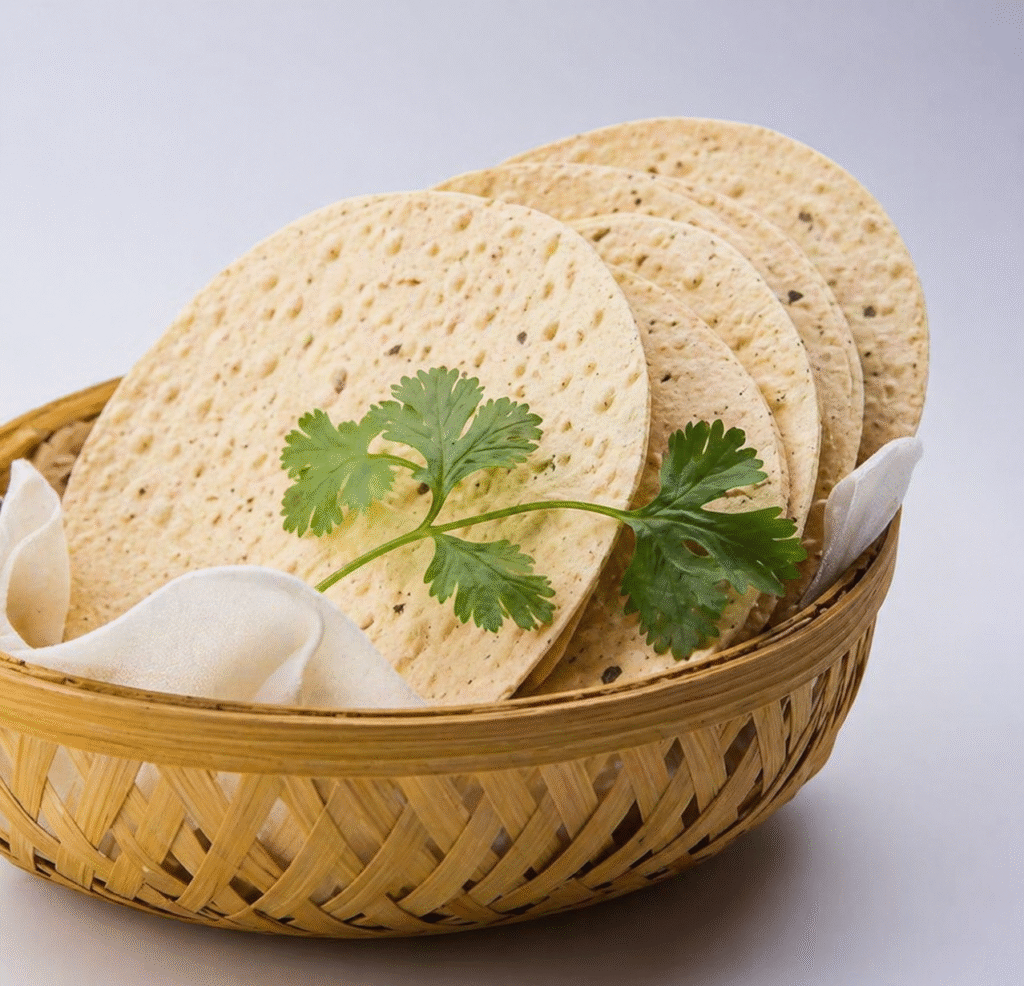
Additionally, the integration of traditional Indian side dishes into global culinary spaces has expanded the market beyond just regional Indian households. International fusion restaurants, European vegan chains, and cross-cultural snack brands are increasingly utilizing crispy papads as a gluten-free, low-calorie alternative to traditional taco shells, chips, or crackers. This expanding consumer base guarantees that wholesale buyers entering this space enjoy sustained, long-term market velocity, shielding them from the sharp demand drops often seen in cyclical or trend-heavy food sectors.
Complete Lijjat Papad Wholesale Price Guide
When developing a commercial procurement budget or executing a Lijjat papad bulk purchase, buyers must realize that wholesale pricing fluctuates based on localized distribution networks, bulk volume tiers, transport distances, and specific product flavors. To give procurement managers, supermarket category heads, and export firms a clear operational baseline, the following comprehensive pricing matrix outlines estimated bulk pricing structures observed across the primary papad wholesale market India.
| Papad Variety & Flavor | Pack Weight | Case Configuration | Wholesale Price Per Case | Wholesale Price Per KG |
|---|---|---|---|---|
| Udad Plain Papad | 200g | 80 Packs / Carton | ₹2,800 - ₹3,100 | ₹175 - ₹193 |
| Udad Black Pepper (Kali Mirch) | 200g | 80 Packs / Carton | ₹2,900 - ₹3,200 | ₹181 - ₹200 |
| Udad Garlic (Lasun) Papad | 200g | 80 Packs / Carton | ₹3,050 - ₹3,350 | ₹190 - ₹209 |
| Moong Special Papad | 250g | 60 Packs / Carton | ₹2,850 - ₹3,150 | ₹190 - ₹210 |
| Moong Punjabi Masala | 250g | 60 Packs / Carton | ₹2,950 - ₹3,250 | ₹196 - ₹216 |
| Chana Masala Papad | 200g | 80 Packs / Carton | ₹3,100 - ₹3,400 | ₹193 - ₹212 |
| Jeera (Cumin) Papad | 200g | 80 Packs / Carton | ₹2,950 - ₹3,200 | ₹184 - ₹200 |
Note: The pricing figures provided in this comprehensive Lijjat papad wholesale price guide are realistic industry estimates compiled from major trading hubs. Actual spot pricing can vary based on raw material costs, seasonal changes, transport costs, and order volumes. For real-time commercial quotes tailored to your delivery region, consulting an established sector specialist like OM Exim Traders is highly recommended.
When analyzing this Lijjat papad wholesale price guide, look closely at the cost breakdown per kilogram. While retail buyers often pay a premium for individual small packs, commercial entities purchasing at a Lijjat papad carton price level unlock significant volume discounts. These discounts form the foundation of downstream profitability for regional sub-distributors, supermarket chains, and international maritime exporters alike.
Current Papad Market Trends in India
The Indian snack and traditional savory market is undergoing a major structural transformation driven by changing consumer habits, modern retail setups, and rising international interest. Today’s buyers are moving away from unbranded, open-air loose goods in favor of hygienic, standardized, and laboratory-tested branded items. This shift has triggered an unprecedented surge in demand across the papad wholesale business, as modern supermarkets, boutique grocery stores, and cloud kitchens refuse to stock uncertified foods that present potential health or consistency risks. Keeping a modern Lijjat papad wholesale price guide handy allows storefront owners to anticipate these demand shifts and secure product inventory before seasonal shortages occur.
Additionally, the integration of traditional Indian side dishes into global culinary spaces has expanded the market beyond just regional Indian households. International fusion restaurants, European vegan chains, and cross-cultural snack brands are increasingly utilizing crispy papads as a gluten-free, low-calorie alternative to traditional taco shells, chips, or crackers. This expanding consumer base guarantees that wholesale buyers entering this space enjoy sustained, long-term market velocity. A reliable Lijjat papad wholesale price guide helps investors evaluate if entering this distribution tier aligns with their long-term growth portfolios.
Factors Affecting Lijjat Papad Wholesale Prices
To accurately use any Lijjat papad wholesale price guide, businesses must understand the underlying economic pressures that influence baseline prices. Wholesale prices are never completely static; they respond to a complex mix of agricultural variables, processing expenses, and supply chain logistics. A thorough Lijjat papad wholesale price guide always highlights how outside environmental forces affect the raw manufacturing index.
Agricultural Raw Material Fluctuations
The primary ingredient in a classic authentic papad is Black Gram flour, commonly known as Udad Dal, along with Moong Dal and Chana Dal. Because these are agricultural crops, their market prices depend heavily on monsoon patterns, crop yields, government minimum support prices, and import-export regulations. When pulse prices rise in major agricultural trading zones, it impacts manufacturing costs, altering the standard wholesale papad supplier pricing structures across the country. This raw material link is why every Lijjat papad wholesale price guide must account for agricultural shifts.
Energy, Fuel, and Supply Chain Logistics
Moving bulk weight across vast domestic geographies requires substantial fuel. Rising diesel prices directly impact the overhead costs of shipping full truckloads from primary production centers to regional warehouses. Furthermore, because papad is a fragile, low-density commodity that takes up considerable physical volume, variations in cargo shipping rates heavily influence the final Lijjat papad dealer cost when landed at regional hubs. For this reason, a location-specific Lijjat papad wholesale price guide is crucial for domestic transport budgeting.
Seasonal Production Bottlenecks
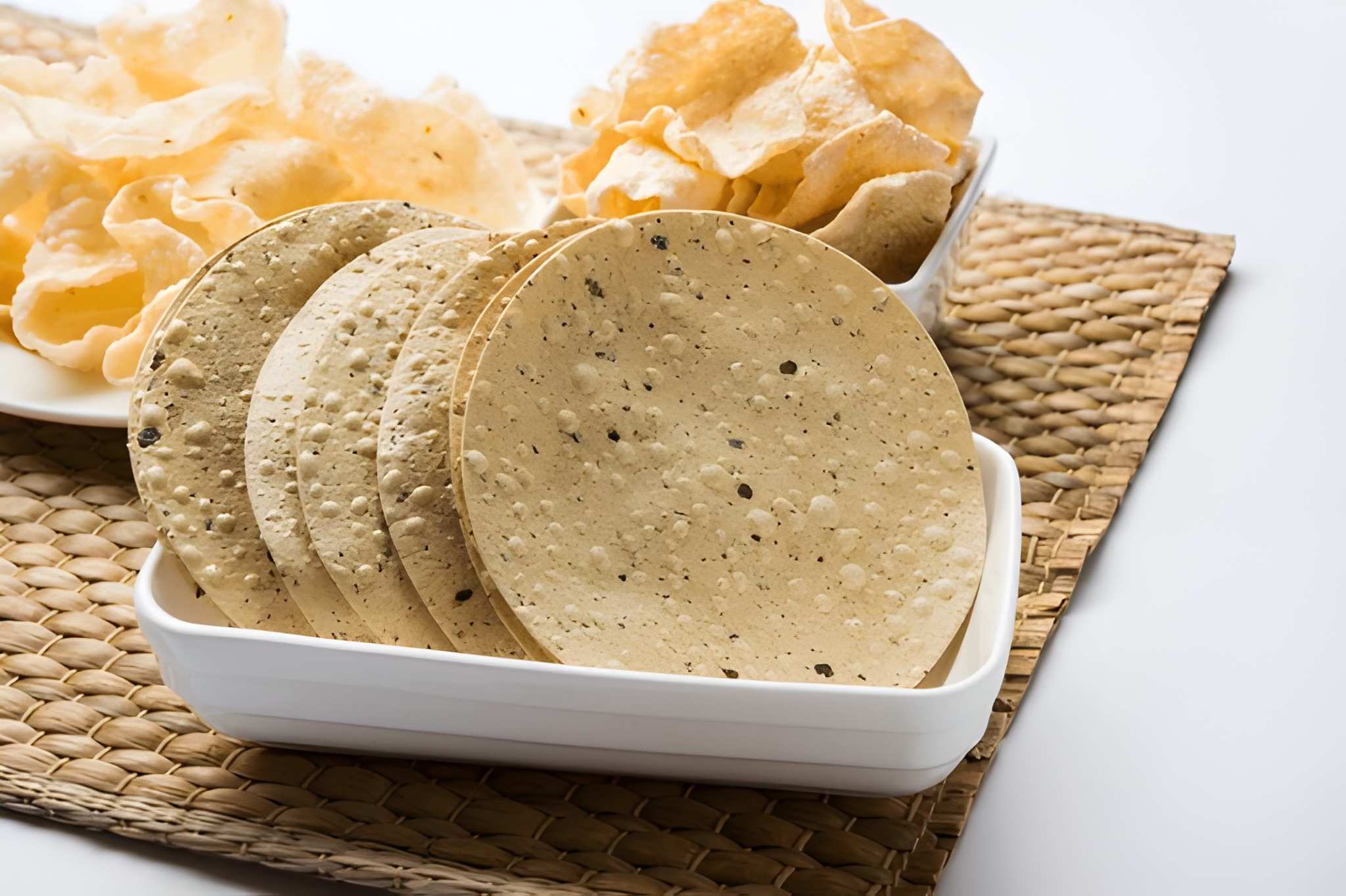
Papad manufacturing relies heavily on natural sun-drying processes to achieve its signature texture and crisp snap. During the heavy Indian monsoon season, prolonged humidity and persistent rainfall can slow down production output at manufacturing hubs. This temporary seasonal dip in supply, combined with steady consumer demand, frequently causes short-term fluctuations in the papad distributor rates during the summer and monsoon months. Importers rely on a seasonal Lijjat papad wholesale price guide to manage these annual pricing shifts safely.
Papad Price Per KG Breakdown
For institutional buyers, sourcing procurement managers, and commercial kitchen operators, evaluating purchases based on individual retail packets can mask true cost efficiency. Instead, evaluating costs through a precise Lijjat papad wholesale price per kg metric provides the clarity needed for accurate financial planning. A master Lijjat papad wholesale price guide simplifies these metrics into transparent per-kilogram values for corporate auditing.
On average, the wholesale baseline cost for standard variants hovers between ₹175 to ₹220 per kilogram, depending on the specific recipe, spice inclusion, and total order volume. When you break down this cost, approximately 60% is driven by raw ingredients like premium pulses, authentic hing (asafoetida), black pepper, and processing oils. The remaining 40% covers manufacturing labor, specialized moisture-barrier packaging, regional warehouse storage, and distributor margins. Checking a comprehensive Lijjat papad wholesale price guide ensures you do not overpay for basic material ingredients.
By keeping a close eye on the papad price per kg, large buyers like industrial catering companies and major exporters can easily identify anomalies in supplier quotes. If a local middleman quotes prices well above these standard rates without providing clear value-add services like customs clearance or door-to-door delivery, savvy buyers know to shift their orders to an established direct channel like OM Exim Traders to keep their sourcing costs optimized. Referencing an updated Lijjat papad wholesale price guide protects your procurement operations from these unnecessary middleman fees.
Different Types of Lijjat Papad Available in Bulk
A major strength of the Lijjat product line is its diverse flavor portfolio, carefully tailored to match the unique taste preferences of different geographic regions. When executing a Lijjat papad bulk purchase, savvy distributors don’t just buy a single variety; they carefully curate an assortment based on data found in a regional Lijjat papad wholesale price guide.
Variant A: Udad Plain Papad
The classic, understated foundation of the entire brand. It features a clean, mild flavor profile that pairs beautifully with any traditional meal, making it an absolute staple for high-volume grocery papad wholesale buyers nationwide. Wholesale managers refer to a standard Lijjat papad wholesale price guide to secure the best bulk tier pricing for this specific year-round staple.
Variant B: Udad Black Pepper (Kali Mirch)
Infused with cracked black peppercorns, this variety offers a bold, sharp bite. It is incredibly popular across Northern and Western India and remains a top choice for a bulk papad supplier for restaurants serving traditional Mughlai or North Indian cuisine. The Lijjat papad wholesale price guide for black pepper varieties remains highly consistent due to steady national production scales.
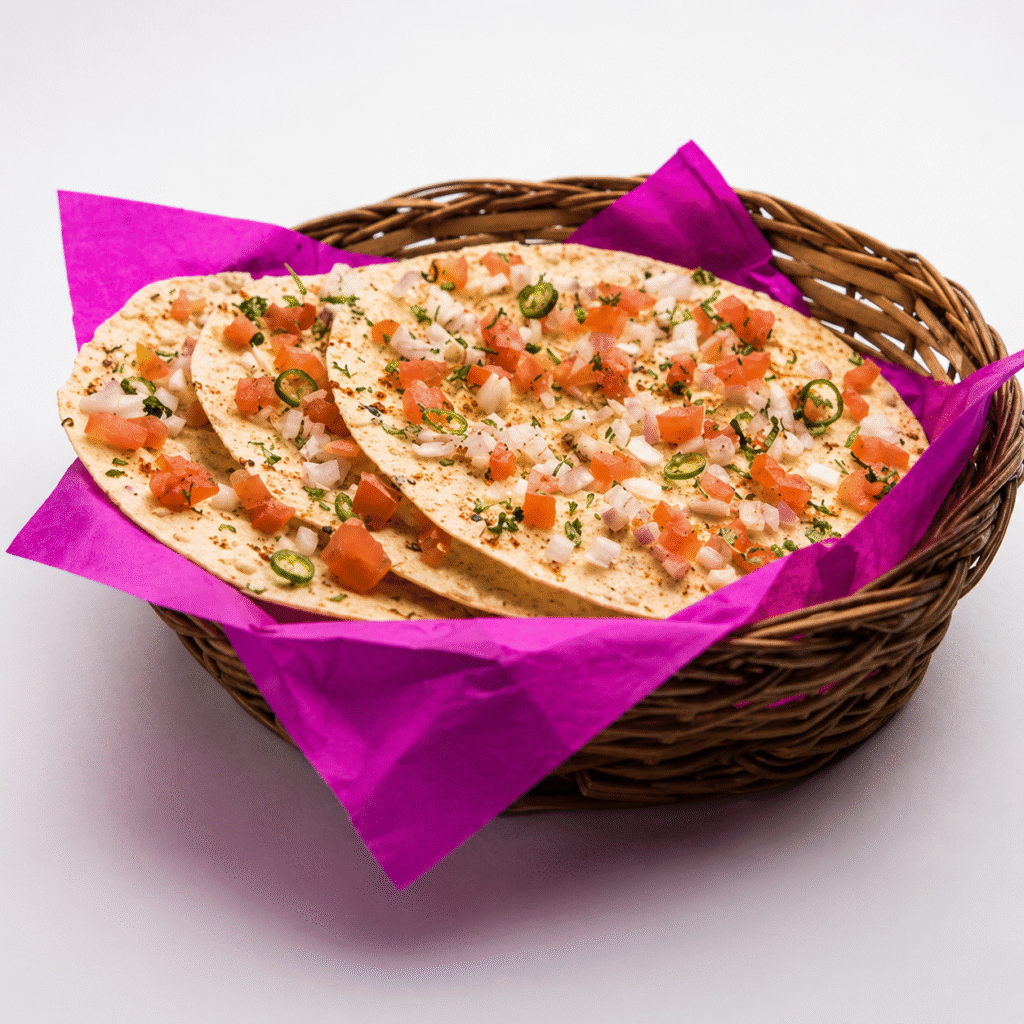
Variant C: Moong Special & Punjabi Masala
Made with a blend of Moong dal and rich spices, these variants offer a lighter texture and a complex, aromatic flavor profile. They are highly sought after by international buyers and premium retail chains catering to health-conscious consumers. Reviewing an international Lijjat papad wholesale price guide helps overseas buyers gauge the freight feasibility of these lighter-density shipments.
Variant D: Garlic (Lasun) & Green Chilli
Bold, pungent, and packed with regional flare, these flavors see heavy demand throughout Central and Southern markets, where spicy accents are a core part of everyday dining. Distributors examine a local Lijjat papad wholesale price guide to understand the pricing differences of these spice-heavy options.
Bulk Ordering Process Explained
Purchasing consumer goods at an industrial scale requires a systematic approach to avoid logistical bottlenecks, inventory shortages, or costly administrative delays. Knowing how to buy Lijjat papad in bulk requires a clear, step-by-step process that protects your capital and ensures reliable delivery times. Buyers should always consult an institutional Lijjat papad wholesale price guide before finalizing payment contracts with third-party networks.
Step 1: Formal Request for Quote (RFQ) Submission
The process begins when the buyer submits a formal procurement request detailing their specific flavor mix, required carton quantities, desired port of delivery, and any specialized labeling or documentation needs. Having a clear Lijjat papad wholesale price guide on hand helps the buyer write a highly accurate and realistic RFQ.
Step 2: Commercial Quotation and Proforma Invoice
The wholesale supplier reviews the request against current factory outputs and transport availability, issuing a detailed Proforma Invoice. This document outlines the exact Lijjat papad dealer price list, applicable taxes, freight arrangements, and estimated production lead times, serving as an individualized Lijjat papad wholesale price guide for that specific transaction.
Step 3: Financial Clearance and Quality Inspection
Once the commercial terms are agreed upon, the buyer arranges payment via secure corporate channels like Letters of Credit (LC) or Telegraphic Transfers (TT). Simultaneously, the supplier coordinates batch allocations, making sure the products have optimal shelf-life dates and pass strict quality checks before final loading.
Step 4: Dispatch, Customs Clearance, and Final Delivery
With all paperwork in order, the cargo is loaded into secure, moisture-controlled transport containers. For international buyers, the supplier handles export customs filings, container loading, and port delivery, providing complete tracking details until the shipment arrives safely at its destination. A comprehensive Lijjat papad wholesale price guide often includes estimated timelines for these shipping stages.
Dealer and Distributor Pricing Structure
The financial framework of the papad wholesale business relies on a structured tier system designed to reward high-volume commitments while maintaining sustainable margins at every step of the supply chain. Sourcing managers examine a Lijjat papad wholesale price guide to identify exactly where middleman markups are increasing their landing costs.
At the top of this chain are Super Stockists and Primary Exporters, who operate on thin, high-volume margins ranging from 3% to 5%. These entities move massive volumes, often handling multiple shipping containers or freight train cars every month. Any standard Lijjat papad wholesale price guide confirms that these thin margins are only profitable due to massive container volumes.
Regional distributors and local wholesalers usually operate on margins between 6% and 12%. This spread covers their local warehousing, delivery trucks, and short-term credit lines for retail stores. Finally, frontline retailers and supermarkets capture the largest individual margins, often ranging from 15% to 25%, which offsets their high retail rents and storefront labor. Partnering with an efficient, direct-tier supplier like OM Exim Traders allows intermediate buyers to bypass unnecessary middleman markups and maximize their own profit potential based on the standard Lijjat papad wholesale price guide.
State-Wise Demand for Papad in India
Demand for this popular snack spans every corner of the country, but the specific flavors and volumes consumed vary heavily based on regional culinary traditions and local populations. Smart logistics managers look at a regional Lijjat papad wholesale price guide to balance cross-state transport fees against expected regional retail sales.
Western India (Maharashtra & Gujarat)
As the birthplace of the brand, Western India remains a massive consumer hub. The demand here focuses heavily on classic Udad Plain and Jeera variants. The high concentration of urban centers makes this a key region for grocery papad wholesale networks supplying local kirana stores and modern supermarkets. A localized Lijjat papad wholesale price guide helps western hub operators keep retail pricing steady.
Northern India (Punjab, Delhi, NCR, & Uttar Pradesh)
The North prefers robust, spicy flavors. Varieties like Punjabi Masala and Udad Black Pepper see incredible volume velocity across these states. Wholesale buyers in this region focus heavily on supplying wedding caterers, dhabas, and major festive markets, using a seasonal Lijjat papad wholesale price guide to accurately calculate holiday catering budgets.
Southern & Eastern India
In Southern markets, papad faces competition from local rice-based papadams, yet seasoned lentil-based options maintain a strong market share in major cities like Bengaluru and Hyderabad. Meanwhile, Eastern regions show a growing appetite for crisp side dishes to pair with traditional rice meals, creating consistent growth opportunities for regional distributors who use a reliable Lijjat papad wholesale price guide to structure their local expansion plans.
How Restaurants and Grocery Stores Buy Papad in Bulk
Different businesses have vastly different operational priorities when it comes to sourcing food supplies in bulk. Using an industry-verified Lijjat papad wholesale price guide helps both store managers and head chefs keep their food cost percentages optimized.
Sourcing Strategies for Restaurants and Foodservice
For commercial kitchens, cloud kitchens, and premium hotel chains, consistency and structural integrity are everything. A broken, crumbled papad cannot be served to a paying customer, making fragile handling a top priority. Chefs look for a dedicated bulk papad supplier for restaurants who can guarantee sturdy, multi-layered carton packaging that protects the product during transit. Foodservice buyers rely on a specialized Lijjat papad wholesale price guide to lock in long-term raw ingredient costs.
Sourcing Strategies for Grocery Stores and Supermarkets
For retail category managers, success depends on maximizing shelf space yield, securing long product expiry dates, and maintaining a competitive retail price point. Supermarkets rely on a clear Lijjat papad wholesale price guide to negotiate volume rebates, end-cap display allowances, and promotional bundles. Having access to a reliable, continuous supply chain is critical; running out of stock on a staple household item like this can frustrate customers, leading them to visit competing grocery chains instead. Checking an updated Lijjat papad wholesale price guide ensures retail store managers maintain healthy profit boundaries.
Export Demand of Indian Papad in UAE and Other Countries
The traditional Indian diaspora, numbering tens of millions across the globe, has created a massive international market for authentic South Asian food brands. This global footprint has transformed the papad export from India sector into a highly lucrative channel for international food distribution firms, supermarket operators, and specialized FMCG trading houses. Importers rely heavily on an international Lijjat papad wholesale price guide to balance sea freight expenses against high overseas retail markups.
Beyond satisfying nostalgic cravings for expatriates, these products are successfully breaking into mainstream Western culinary spaces. Because traditional lentil papads are naturally gluten-free, high in plant-derived protein, and low in calories, they align perfectly with modern international dietary trends. As a result, savvy international buyers use a comprehensive papad export pricing guide alongside a trusted Lijjat papad wholesale price guide to secure large container-load shipments, distributing them directly into mainstream global supermarkets, health food stores, and international airport retail hubs.
Benefits of Buying from OM Exim Traders
Partnering with OM Exim Traders gives commercial buyers a distinct competitive edge, offering several key business advantages:
- Guaranteed Product Authenticity: In an industry where counterfeit or lower-quality lookalike goods can occasionally slip into loose wholesale markets, OM Exim Traders provides absolute certainty. Every single carton sourced matches the premium standards outlined in our Lijjat papad wholesale price guide, ensuring 100% genuine, factory-fresh quality.
- Highly Competitive Pricing Structures: By eliminating unnecessary intermediate brokers and optimizing their internal logistics, OM Exim Traders offers highly competitive wholesale Lijjat papad rates that help maximize your business’s net profit margins.
- End-to-End Export Support: For international buyers, the complexities of cross-border shipping, custom tariffs, health certificates, and bill of lading filings can be daunting. OM Exim Traders manages this entire process seamlessly, keeping procurement fully aligned with our global Lijjat papad wholesale price guide.
- Customized Order Mixes: Recognizing that consumer tastes vary by region, they allow buyers to mix different flavors and sizes within a single container or truckload, preventing overstocking on slower-moving variants.
Supplier Comparison and Wholesale Buying Tips
Making an informed procurement decision requires carefully comparing potential supply sources across key performance indicators. The comparative matrix below highlights the operational advantages of choosing a structured distributor, matching the safety standards recommended in a high-authority Lijjat papad wholesale price guide.
| Operational Metric | Primary Factory Direct | Open-Market Wholesaler | OM Exim Traders Advantage |
|---|---|---|---|
| Minimum Order Volume | Extremely High (Multiple Truckloads) | Low to Medium | Balanced & Flexible Tier Options |
| Flavor Mixing Flexibility | Rigid (Single Variety Per Run) | Unreliable / Mixed Dates | High (Custom Assortments Allowed) |
| Export Documentation Support | Limited / Standard Domestic Only | None Available | Full End-to-End Global Compliance |
| Consolidated FMCG Sourcing | No (Single Brand Only) | Manual & Fragmented | Yes (Complete Snack Portfolio Sourcing) |
| Lead Time Consistency | Subject to Factory Delays | Variable Spot Availability | Highly Dependable via Buffer Stock |
Pro Wholesale Buying Tips
Prioritize Remaining Shelf Life: Always ask for product batches manufactured within the last 15 to 30 days, especially for international ocean shipments, to ensure your retail customers get maximum shelf life.
Plan for Seasonal Changes: Increase your inventory levels slightly ahead of the monsoon season to protect your business from potential weather-related production slowdowns across India, as noted in our Lijjat papad wholesale price guide.
Optimize Shipping Volume: When ordering internationally, try to order in full container load (FCL) volumes. Shipping a partially empty container increases your per-unit freight cost, chipping away at the profit margins calculated in your Lijjat papad wholesale price guide.
Future of Indian Papad Export Market
The long-term outlook for the global distribution of traditional Indian foods is incredibly bright. Driven by expanding cross-border e-commerce networks, simplified international shipping procedures, and a growing global appreciation for authentic ethnic cuisines, demand is projected to grow steadily over the coming decade. Companies use a global Lijjat papad wholesale price guide to map out their international market investments safely over a multi-year horizon.
Furthermore, as major global supermarket chains in Europe, North America, and the Middle East actively expand their international food aisles, branded Indian classics like Lijjat are transitioning from niche specialty items to mainstream grocery staples. Businesses that establish strong supply chains today with trusted partners like OM Exim Traders are perfectly positioned to capture this long-term global growth, turning steady consumer demand into sustainable corporate profitability. Keeping an updated Lijjat papad wholesale price guide nearby ensures your sales teams can lock in competitive export deals ahead of your global competitors.
Frequently Asked Questions (FAQs) about Lijjat Papad Wholesale Price Guide
The minimum order volume varies significantly based on your destination and shipping method. For domestic road freight within India, suppliers typically require a minimum of 50 to 100 master cartons. For international ocean freight, ordering a minimum of a full 20-foot shipping container is standard to keep per-unit transport costs efficient, as recommended in our standard Lijjat papad wholesale price guide.
We use heavy-duty, five-ply corrugated outer master cartons specifically engineered to handle high vertical stacking weight. Additionally, individual packs are tightly arranged within the case to minimize internal movement, protecting the items across rough roads or long sea journeys.
When kept in a cool, dry place away from direct sunlight and moisture, standard lentil papads maintain peak freshness for approximately 10 to 12 months from the date of manufacture. A comprehensive Lijjat papad wholesale price guide always highlights this standard shelf-life window.
Yes. The UAE Ministry of Climate Change and Environment mandates clear product labeling in both Arabic and English. Labels must display production and expiration dates, exact ingredient lists, country of origin, and nutritional information. OM Exim Traders handles all these compliance details for your international shipments.
Price variations are driven by the costs of different raw ingredients. Specialty flavors require premium spices, pure garlic pastes, or specialized seasoning blends, which slightly increases manufacturing costs compared to the classic plain varieties. A detailed Lijjat papad wholesale price guide always breaks down these minor flavor cost differences.
Absolutely. Partnering with a flexible supplier like OM Exim Traders allows you to create custom product assortments within a single container or truckload, helping you match the exact taste preferences of your local market without overordering on any single item, all while staying fully aligned with our Lijjat papad wholesale price guide.
The master carton configuration depends entirely on the unit pack weight. For the standard 200-gram retail packs, a master carton contains 80 packets, bringing the total net weight to 16 kg. For the 250-gram variants (such as Moong Special or Punjabi Masala), a master carton consists of 60 packets, totaling 15 kg. Commercial buyers use these case configurations to calculate precise freight volumes.
The overall transit timeline depends on ocean freight schedules and export-import customs clearance. Generally, sea freight from Western Indian ports (like Nhava Sheva) to Dubai’s Jebel Ali port takes around 5 to 7 days. However, factoring in order processing, palletization, customs documentation, and port handling, it is practical for international buyers to plan for a total lead time of 15 to 20 days.
Because papad is an inherently fragile commodity, a minor risk of cracking exists during long-distance transit. However, tier-one distributors like OM Exim Traders utilize heavy-duty, 5-ply corrugated outer master cartons to keep breakage rates well below 1% to 2%. For large commercial contracts, a specific damage margin or buffer allocation is mutually agreed upon during negotiation to safeguard the buyer's investment.
Yes, every authentic retail packet comes pre-printed with standard International Article Numbering (EAN/UPC) barcodes. This allows global supermarket chains, hypermarkets, and modern retail outlets to seamlessly scan the products directly into their Point of Sale (POS) and automated inventory management systems without needing manual relabeling.
Explore More
Order Now
+91 9040030306
info@omeximtraders.com